NVIDIA RTX 50 Hot Spot Temperatures Hidden: Tests Reveal Up to 39°C Higher Junction Temps
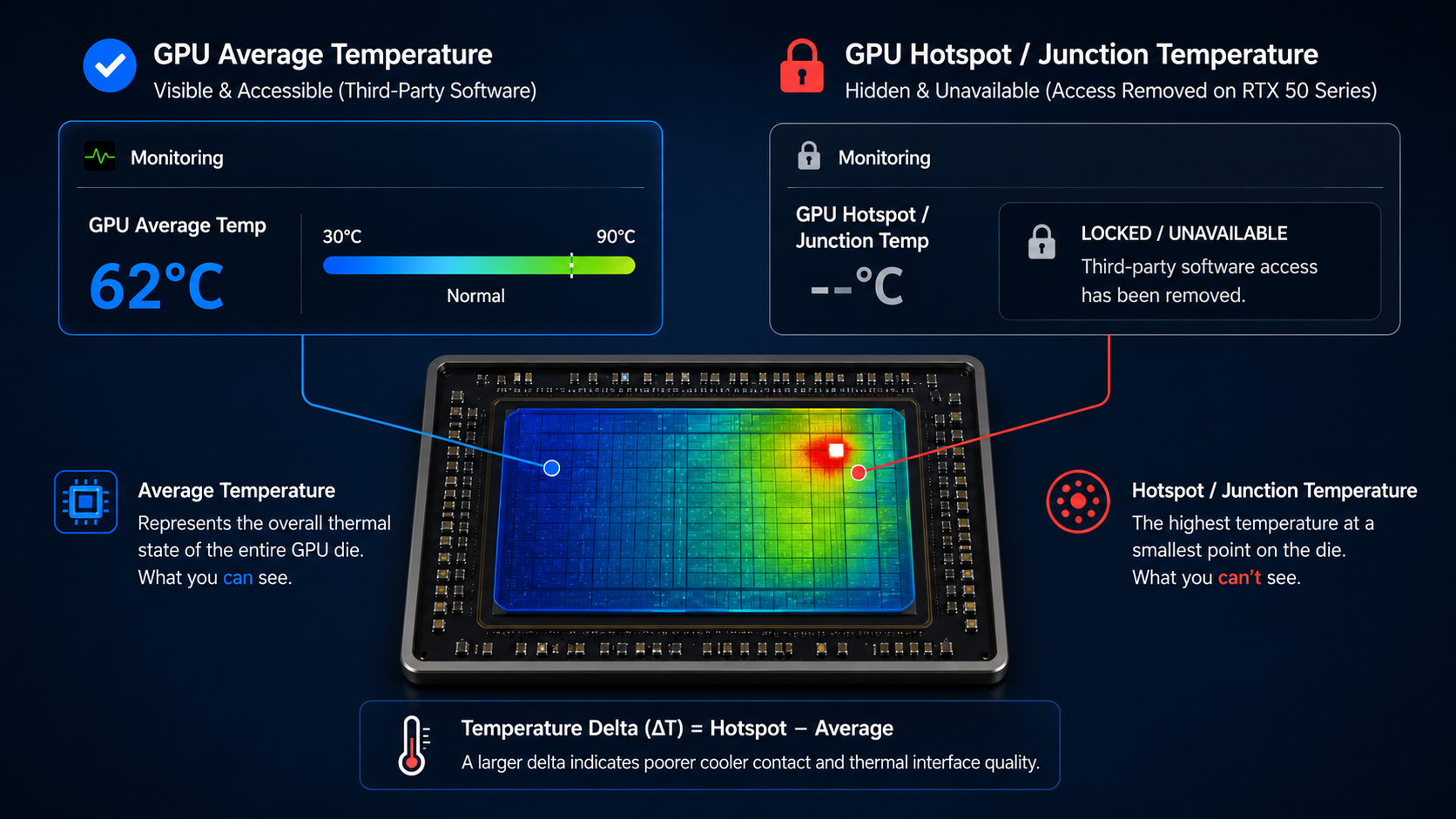
NVIDIA’s GeForce RTX 50 series has introduced a notable change to GPU temperature monitoring: hot spot (junction) temperature data is no longer accessible through popular third-party monitoring utilities. While users can still monitor the average GPU core temperature, the hottest point on the GPU die remains hidden from conventional software.
Recent real-world repair testing suggests that this concealed metric can differ dramatically from the reported core temperature. In one documented case, the GPU’s junction temperature reached 107°C, while monitoring software reported only 68°C, resulting in a 39°C temperature delta. Such discrepancies can make diagnosing cooling issues significantly more difficult and may allow thermal problems to go unnoticed until they begin affecting performance.
🌡️ RTX 50 Series Hot Spot Temperatures Can Be More Than 30°C Higher #
Beginning in early 2025, NVIDIA removed third-party access to junction temperature sensors on GeForce RTX 50 graphics cards. Utilities such as GPU-Z and HWiNFO can now display only the average GPU core temperature rather than the maximum temperature recorded anywhere on the silicon.
Hot spot temperature—also known as junction temperature—represents the hottest measured location on the GPU die.
Unlike the reported average temperature, this value provides valuable insight into localized thermal conditions and has traditionally served as an important indicator of cooling efficiency.
Previous generations of NVIDIA GPUs, along with current AMD graphics cards, expose this sensor directly to users.
Why Hot Spot Temperature Matters #
The difference between average GPU temperature and junction temperature offers a quick way to evaluate cooling performance.
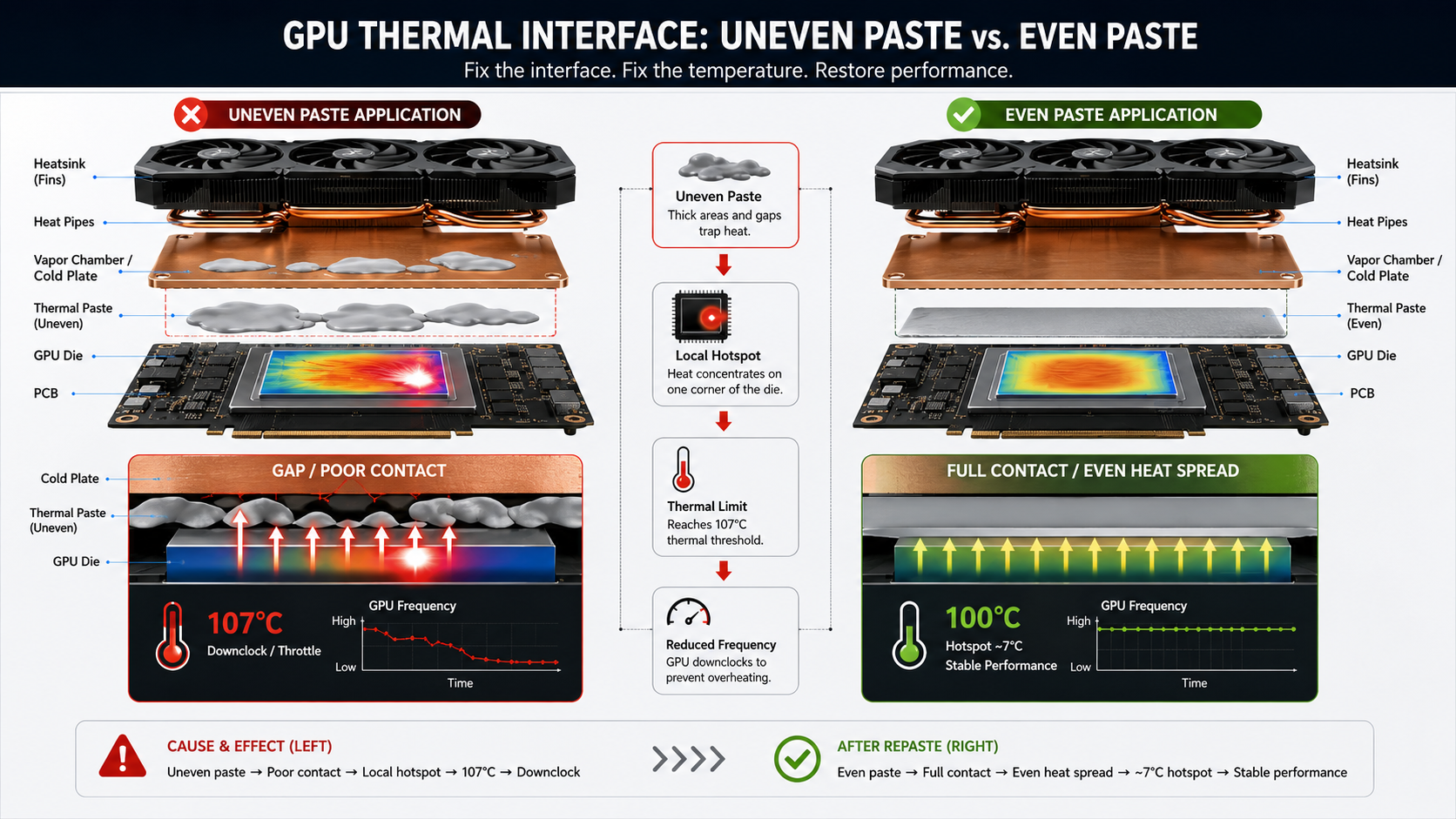
A relatively small temperature gap generally indicates:
- Proper heatsink contact
- Even thermal paste distribution
- Efficient heat transfer
- Balanced cooling across the GPU die
Conversely, an unusually large temperature delta may indicate:
- Uneven thermal paste application
- Poor cooler mounting pressure
- Aging thermal interface materials
- Localized overheating
Without visibility into the junction temperature, these problems become significantly harder to identify.
🔧 Hidden Junction Temperatures Complicate Troubleshooting #
Most graphics cards regulate cooling primarily based on the reported average GPU temperature.
If localized hot spots develop while the average temperature remains moderate, fan control algorithms may never respond aggressively enough to cool the affected region.
This creates several potential issues:
- Localized thermal throttling
- Reduced sustained boost clocks
- Unexpected performance fluctuations
- Long-term thermal stress on the GPU
Persistent hot spots may also accelerate silicon aging over extended periods, potentially reducing long-term reliability.
Diagnosing Cooling Problems Becomes More Difficult #
Without access to junction temperature data, users cannot easily determine whether thermal issues originate from:
- Factory thermal paste degradation
- Improper heatsink installation
- Uneven mounting pressure
- Cooler maintenance after disassembly
Instead of identifying these issues through software monitoring, users may need to physically inspect the cooling system or submit the graphics card for professional servicing.
🛠️ Internal NVIDIA Tools Reveal the Missing Data #
Although NVIDIA has removed public access to junction temperature readings, the sensors themselves remain active.
Brazilian GPU repair technician Paulo Gomes demonstrated that the hidden data can still be accessed using NVIDIA’s internal diagnostic utility, MODS.
Real-World RTX 5070 Ti Test Results #
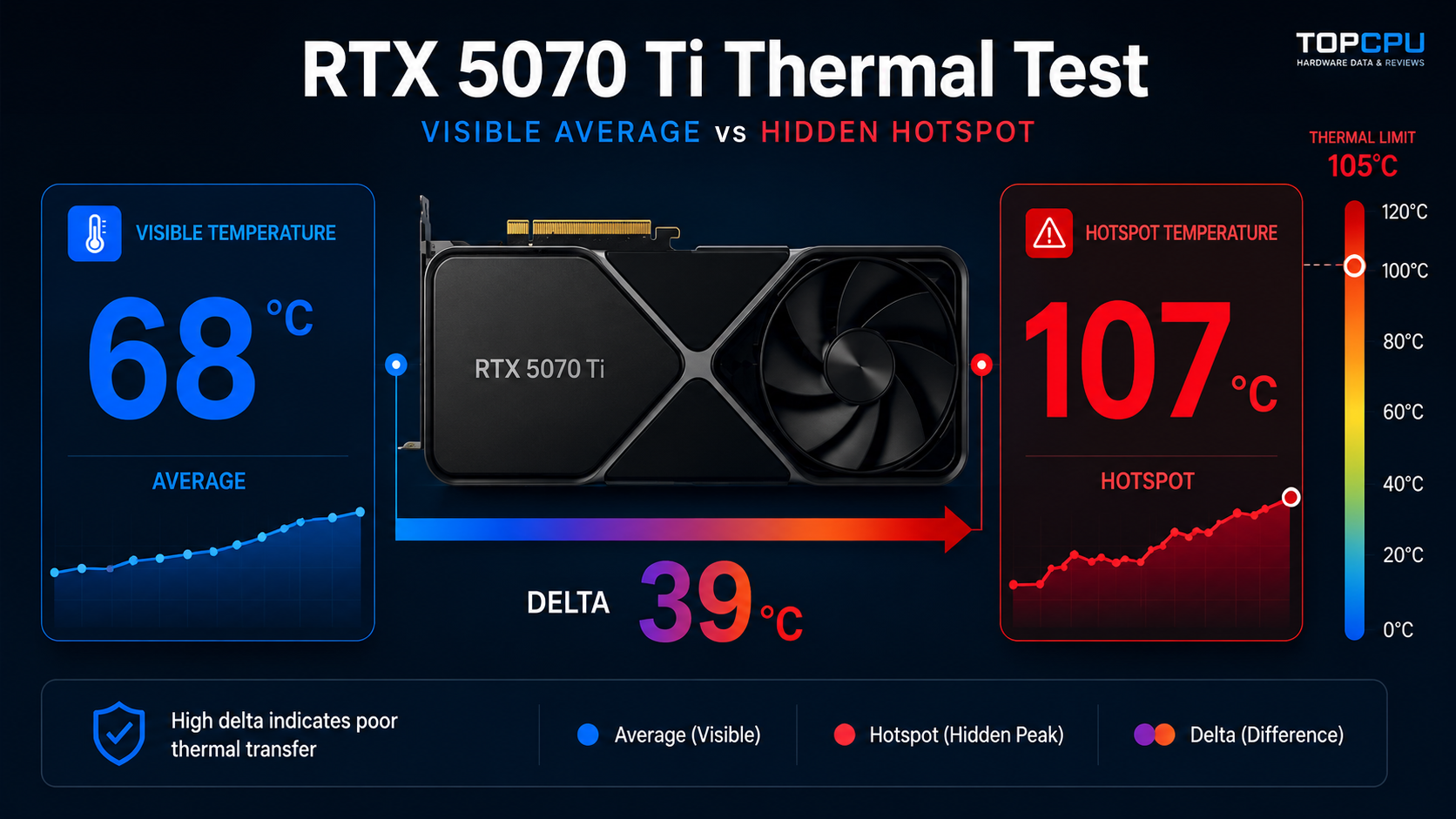
Testing performed on a faulty Gigabyte RTX 5070 Ti produced the following readings:
| Measurement | Temperature |
|---|---|
| Reported GPU Temperature | 68°C |
| Actual Hot Spot Temperature | 107°C |
| Temperature Difference | 39°C |
The junction temperature reached 107°C, matching NVIDIA’s documented thermal limit.
Once this threshold is reached, the GPU automatically reduces clock speeds and power consumption to protect the silicon, resulting in reduced application performance.
🧪 Uneven Thermal Paste Was the Root Cause #
After disassembling the graphics card, inspection revealed that the thermal interface material had been applied unevenly.
Replacing the thermal paste immediately improved cooling performance.
Results After Reapplying Thermal Paste #
Following reassembly:
- Hot spot temperature dropped by approximately 7°C
- Thermal throttling was eliminated
- Sustained boost performance returned to expected levels
The repair also suggested that higher-performance thermal compounds could further reduce junction temperatures.
Most importantly, the test confirms that RTX 50 GPUs still include functional junction temperature sensors. The information simply remains inaccessible through public monitoring software.
⚙️ Why Hide the Sensor? #
NVIDIA has not publicly explained why junction temperature access was removed.
One commonly discussed possibility is that exposing temperatures exceeding 100°C could unnecessarily alarm users, despite those values remaining within the GPU’s intended operating specifications.
Whether this was the motivation or not, the decision has clear consequences for advanced users.
Hardware enthusiasts, system builders, and repair technicians now face greater difficulty when diagnosing:
- Cooler installation quality
- Thermal interface performance
- Mounting pressure issues
- Early-stage cooling degradation
A metric that previously offered immediate insight into GPU cooling health is now effectively unavailable without specialized diagnostic software.
📊 Practical Impact for RTX 50 Owners #
While the hidden junction temperatures may appear concerning, available testing does not indicate a widespread hardware defect.
Current evidence suggests:
- Junction temperatures can be substantially higher than reported averages.
- The sensors remain active internally.
- NVIDIA’s thermal protection mechanisms continue to function as intended.
- The observed temperatures remain within official operating limits.
For most users, normal operation should not be affected.
However, enthusiasts who frequently modify cooling solutions, replace thermal paste, overclock their GPUs, or troubleshoot thermal behavior now have significantly fewer tools available for diagnosing cooling performance.
📝 Conclusion #
The GeForce RTX 50 series represents a notable shift in GPU thermal monitoring by restricting access to junction temperature data through third-party software. Although average GPU temperatures remain visible, recent repair investigations have demonstrated that actual hot spot temperatures can exceed reported values by nearly 40°C.
Real-world testing confirms that the hardware sensors continue to operate internally, and professional diagnostic tools can still access them. Nevertheless, removing this information from public monitoring applications makes identifying cooling deficiencies considerably more challenging.
For everyday users operating within stock specifications, NVIDIA’s built-in thermal protection should continue to safeguard the hardware. For enthusiasts, repair technicians, and overclockers, however, the absence of junction temperature visibility reduces transparency into one of the GPU’s most valuable thermal diagnostics.