Ryzen 9000X3D and the 1000 FPS Claim: Hype vs Reality
AMD has generated significant buzz with a bold claim: its Ryzen 9000X3D processors can achieve 1000 FPS in popular esports titles when paired with top-tier GPUs.
While technically possible, the real story is more nuanced. The headline number reflects a best-case performance ceiling, not a typical gaming experience.
🎯 AMD’s 1000 FPS Benchmark Explained #
AMD highlights three key models:
- Ryzen 7 9800X3D
- Ryzen 9 9950X3D
- Ryzen 9 9955HX3D (mobile)
Under controlled lab conditions, these CPUs reportedly reach 1000 FPS across select esports titles.
Test Environment #
- OS: Windows 11 (24H2), with VBS disabled
- Memory: DDR5-6000 CL30
- GPU: NVIDIA RTX 5080 / RTX 5090-class hardware
- Resolution: 1080p
- Games: CS2, Valorant, League of Legends, PUBG, Naraka: Bladepoint
These settings are highly optimized to remove bottlenecks and maximize CPU-bound performance.
📉 Real-World Performance: What Benchmarks Show #
Independent testing tells a more grounded story.
- Typical averages: 600–700 FPS
- Even with flagship GPUs like RTX 5090-class hardware
- Heavily dependent on game engine and scene complexity
Why the Gap? #
- AMD’s results likely reflect peak or near-peak frame bursts
- Specific scenes with minimal GPU load
- Aggressive system tuning and ideal conditions
For context, extreme overclocking setups (e.g., liquid nitrogen cooling) have approached 1000 FPS before—but these are not practical for everyday users.
🖥️ The Display Bottleneck #
Even if your system could sustain 1000 FPS, current display technology cannot keep up.
Monitor Reality (2026) #
- Mainstream esports panels: 360–480Hz
- Cutting-edge prototypes: 500–750Hz
- No consumer monitor supports 1000Hz
Practical Impact #
- Frames beyond refresh rate are not visible
- Diminishing returns well before 1000 FPS
- Input latency gains become marginal past ~500 FPS
In short, the hardware is outrunning the display ecosystem.
⚖️ Marketing vs Practical Value #
AMD’s 1000 FPS claim is best understood as a technology demonstration, not a target for typical users.
For Desktop Gamers #
- 600+ FPS already exceeds real-world needs
- Competitive advantage plateaus at very high frame rates
For Laptop Gamers #
- Displays usually capped at 240–360Hz
- Even high-end mobile chips cannot fully utilize extreme FPS
What AMD Is Really Showing #
- Strong CPU-side scaling in esports workloads
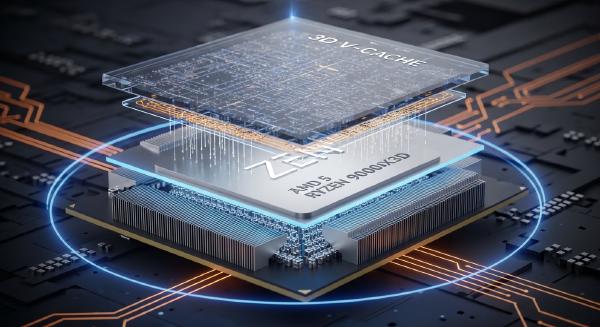
- The advantage of large L3 cache (3D V-Cache)
- Headroom for future display and engine advancements
🔮 Final Take: A Glimpse of the Future #
The Ryzen 9000X3D series pushes CPU gaming performance to new extremes—but 1000 FPS is not a practical target today.
- Realistic performance: 600–700 FPS
- Display limitations cap visible benefits
- Value lies in consistency, latency, and headroom, not peak numbers
That said, the claim signals where the industry is heading. As engines evolve and ultra-high-refresh displays mature, today’s “overkill” performance may become tomorrow’s baseline.