
NVIDIA H20 China Ban Accelerates Huawei Ascend AI Chip Push
The latest U.S. restrictions on AI chip exports to China have placed NVIDIA’s H20 and AMD’s MI308 under a new licensing requirement, potentially reshaping the competitive landscape for AI accelerators in China.
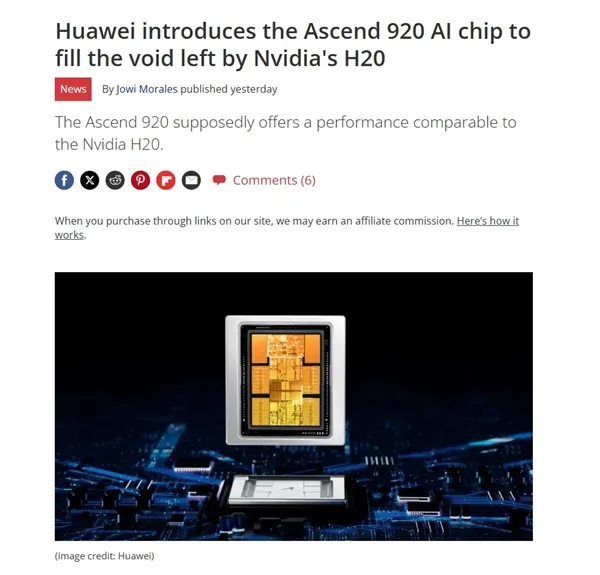
The policy arrives as Chinese semiconductor companies, led by Huawei, continue developing domestic alternatives. Just one day after the reported NVIDIA H20 restrictions, Huawei unveiled its next-generation Ascend 920 AI processor, highlighting how quickly export controls can influence the development of China’s domestic AI chip ecosystem.
🚨 NVIDIA H20 and AMD MI308 Face New Export Requirements #
The U.S. Department of Commerce announced that exports of NVIDIA H20, AMD MI308 and comparable AI accelerators to China would require government licenses.
The H20 was specifically designed for the Chinese market to comply with earlier U.S. export restrictions. The latest licensing requirement therefore represents another significant change for NVIDIA’s China business.
NVIDIA estimated that the new restrictions could result in approximately $5.5 billion in charges and related financial impact in the following quarter. AMD also expected a substantial financial impact, reportedly around $800 million.
The immediate financial consequences are significant, but the longer-term effect could be even more important: Chinese customers may have stronger incentives to adopt domestic AI accelerators rather than depend on products whose availability can change with U.S. policy.
🇨🇳 Huawei Unveils Ascend 920 as H20 Alternative #
Huawei announced its next-generation Ascend 920 AI chip shortly after the H20 export restrictions were reported.
Market sources indicated that the Ascend 920 could enter mass production in the second half of 2025, potentially positioning it as an alternative to NVIDIA’s H20 for Chinese AI customers.
Reports have suggested that the Ascend 920 could feature:
- 6nm process technology
- More than 900 TFLOPs of computing performance per accelerator card
- HBM3 high-bandwidth memory
- Memory bandwidth of up to approximately 4 TB/s
- Higher performance than Huawei’s previous-generation Ascend accelerators
The exact specifications and real-world performance of the Ascend 920 would ultimately depend on production versions and software optimization.
Huawei’s previous Ascend 910C has reportedly achieved around 60% of the inference performance of NVIDIA’s H100 in certain comparisons. The Ascend 920 is intended to push the company’s AI accelerator platform further.
⚔️ NVIDIA H20 vs. Huawei Ascend 920 #
The growing competition between NVIDIA and Huawei illustrates the strategic importance of China’s AI accelerator market.
| Feature | NVIDIA H20 | Huawei Ascend 920 |
|---|---|---|
| Architecture | Hopper | Ascend architecture |
| Target market | China | China and domestic AI ecosystem |
| Memory | HBM | HBM3 reportedly |
| Positioning | Export-compliant NVIDIA AI accelerator | Next-generation domestic AI accelerator |
| Key advantage | NVIDIA CUDA ecosystem | Domestic supply and strategic independence |
| Market outlook | Affected by export controls | Potential beneficiary of restrictions |
NVIDIA still benefits from a mature AI software ecosystem, extensive developer adoption and broad hardware compatibility. Huawei, however, can benefit from growing demand for domestic semiconductor alternatives.
If Chinese technology companies increasingly prioritize supply certainty and domestic procurement, Huawei could gain additional opportunities to expand its AI accelerator business.
🏢 Alibaba, Tencent and ByteDance Face a Strategic Choice #
Several of China’s largest technology companies have historically been major buyers of NVIDIA AI accelerators, including Alibaba, Tencent and ByteDance.
The H20 was particularly important because it provided a way for Chinese companies to access NVIDIA’s AI computing ecosystem while complying with earlier U.S. export restrictions.
New licensing requirements could encourage these companies to diversify their AI infrastructure.
Potential alternatives include:
- Huawei Ascend accelerators
- Other Chinese AI processor vendors
- Internally developed AI chips
- Multi-vendor AI clusters combining domestic and foreign hardware where permitted
This transition is not necessarily straightforward. AI accelerator replacement involves more than hardware performance. Software frameworks, compiler support, model optimization, networking, distributed computing and developer tools all affect the total cost of migrating from one platform to another.
🗣️ Jensen Huang Has Called Huawei a Major Competitor #
NVIDIA CEO Jensen Huang has publicly acknowledged Huawei’s growing technological capabilities.
In a March 2025 interview, Huang described Huawei as one of China’s most powerful technology companies and noted its success across multiple markets. He also criticized the way U.S. restrictions on Chinese technology companies had been implemented.
NVIDIA has reportedly identified Huawei as a competitor in its corporate planning for multiple consecutive years.
The development of the Ascend 920 reinforces that assessment. Huawei is no longer competing only through individual AI chips; it is building a broader domestic computing ecosystem around its processor technology.
📈 Export Controls Could Accelerate China’s Chip Development #
The central issue extends beyond NVIDIA and Huawei.
Restricting access to advanced foreign processors can create short-term pressure on Chinese technology companies, but it can also increase incentives to develop domestic semiconductor technologies.
Analysts cited in reports about the H20 restrictions have warned that U.S. policies could unintentionally accelerate China’s efforts to build competitive alternatives.
The potential long-term effect is particularly important.
If Chinese AI chip companies eventually reach competitive performance levels, they could establish a large domestic customer base before expanding into international markets. By then, U.S. semiconductor companies could face greater difficulty recovering market share.
This creates a complicated strategic dynamic:
Export controls → reduced access to NVIDIA → stronger domestic demand → increased investment in Chinese AI chips → faster development of alternative ecosystems.
🚗 China’s Semiconductor Independence Extends Beyond AI #
The push toward domestic chips is not limited to AI accelerators.
Chinese semiconductor development is expanding across:
- AI processors
- CPUs
- GPUs
- Automotive processors
- Networking chips
- Data-center accelerators
- Consumer electronics
The automotive industry provides another example. Chinese manufacturers are increasingly developing their own processors or working with domestic semiconductor companies to reduce dependence on foreign suppliers.
As domestic semiconductor capabilities improve across multiple sectors, restrictions on individual U.S. chip suppliers could have effects that extend beyond the immediate AI market.
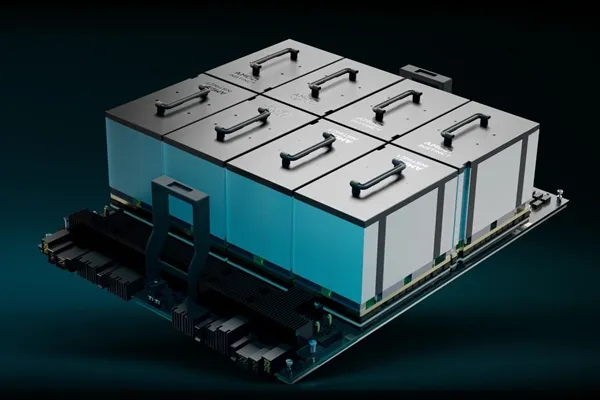
💰 Trade Restrictions Are Affecting Hardware Prices #
The semiconductor restrictions are also part of a broader period of trade and tariff uncertainty affecting technology companies.
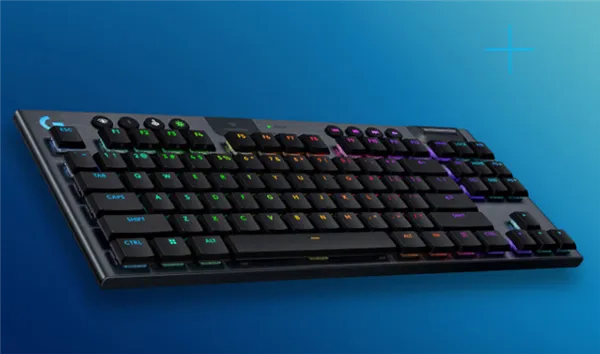
Logitech, for example, reportedly raised prices on a significant portion of its products in the U.S. market during this period.
Reported examples included:
- Logitech K400 Plus: $27.99 → $34.99
- MX Keys S: $109.99 → $129.99
- MX Master 3S: $99.99 → $119.99
The reported increases varied considerably by product category. Some products reportedly remained unchanged, while others even became cheaper.
Although Logitech did not publicly attribute every price change to tariffs, the broader trade environment was widely considered a potential factor.
📦 DHL Warns of U.S. Customs Disruptions #
The broader trade-policy impact has also extended into international logistics.
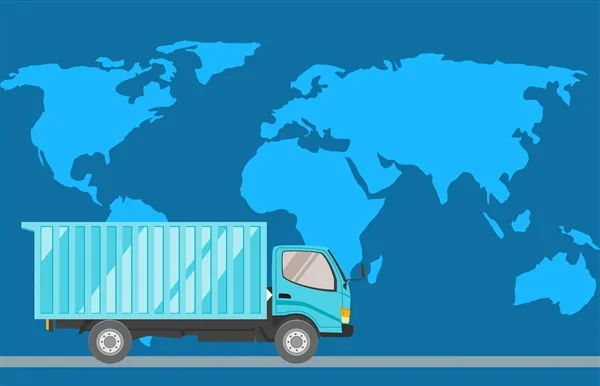
DHL announced that it would temporarily suspend certain B2C parcel deliveries to the United States beginning April 21 because new customs requirements created additional costs and administrative complexity.
U.S. Customs and Border Protection had introduced stricter procedures for certain imported goods valued above $800, increasing documentation and customs-processing requirements.
DHL warned that international B2C shipments exceeding the threshold could experience delays, while B2B shipments were expected to face a comparatively smaller impact.
These developments demonstrate that trade restrictions can affect the technology industry at multiple levels—from AI processors and semiconductor supply chains to consumer electronics pricing and international logistics.
🔍 What the NVIDIA H20 Ban Means for the AI Chip Market #
The H20 restrictions could become an important turning point in the competition between foreign and domestic AI accelerators in China.
For NVIDIA, the challenge is not simply replacing lost H20 sales. The bigger concern is that customers who migrate to domestic hardware may also migrate their software stacks, development tools and long-term infrastructure investments.
For Huawei and other Chinese semiconductor companies, the situation creates an opportunity to expand adoption, improve software compatibility and strengthen their position within China’s AI computing ecosystem.
The result could be a more fragmented global AI accelerator market, with different hardware and software ecosystems developing around separate technology and regulatory environments.
🎯 Key Takeaway #
The NVIDIA H20 China ban highlights how export controls are changing the global AI semiconductor landscape.
NVIDIA faces immediate restrictions on one of its most important China-focused AI accelerators, while Huawei is advancing its Ascend 920 platform as a potential domestic alternative. For Chinese technology companies, the growing availability of local AI processors could reduce dependence on NVIDIA over time.
The most important consequence may therefore extend beyond the H20 itself. Continued restrictions could accelerate China’s investment in domestic AI chips, semiconductor manufacturing and software ecosystems, potentially changing the competitive balance of the global AI accelerator market.
❓ Frequently Asked Questions #
Why was the NVIDIA H20 restricted in China? #
The U.S. government introduced new licensing requirements for exports of the NVIDIA H20 and certain other advanced AI accelerators to China. The move represents a further tightening of U.S. controls on AI computing technology.
What is Huawei Ascend 920? #
The Ascend 920 is a next-generation AI accelerator developed by Huawei. Reports indicated that it was expected to enter mass production in the second half of 2025 and could become an important domestic alternative to NVIDIA’s China-focused AI products.
Can Huawei Ascend chips replace NVIDIA H20? #
Huawei’s Ascend accelerators could replace some H20 deployments, particularly where Chinese customers prioritize domestic supply. However, replacing NVIDIA hardware at scale requires comparable software, networking, compiler and AI framework support in addition to competitive hardware performance.
How much money could NVIDIA lose from the H20 restrictions? #
NVIDIA estimated approximately $5.5 billion in financial impact from the latest restrictions based on the information available at the time. The longer-term effect depends on future licensing decisions, customer demand and NVIDIA’s ability to maintain its position in the Chinese market.
Will export controls accelerate China’s domestic chip industry? #
Export restrictions can increase incentives for Chinese companies to develop and purchase domestic semiconductor products. The extent to which this translates into globally competitive AI chips will depend on manufacturing capabilities, chip architecture, software ecosystems and continued investment.