Samsung HBM4 Production Could Double in 2027
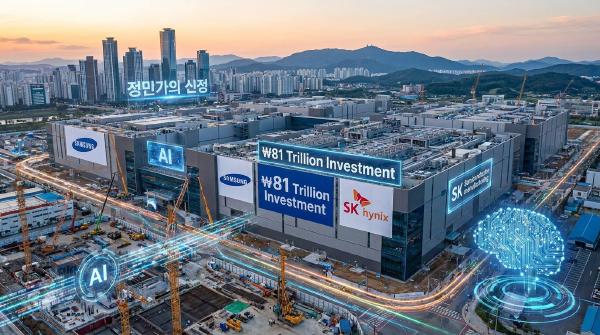
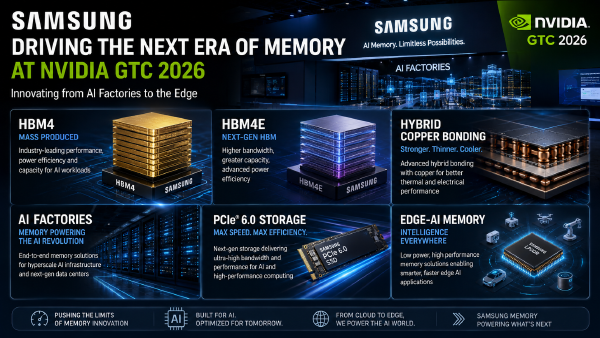
Samsung Electronics is reportedly preparing to at least double its HBM4-series production in 2027, covering both sixth-generation HBM4 and the next-generation HBM4E. The planned expansion would mark a significant shift in Samsung’s HBM strategy—from addressing technology and yield gaps to pursuing large-scale volume shipments.
Industry reports indicate that Samsung is already preparing its supply chain for the increase. Demand for glass carriers, a critical material used during DRAM wafer thinning, is expected to rise sharply, while HBM4 and HBM4E are projected to account for a substantially larger share of Samsung’s total HBM shipments.
The move comes as AI accelerators continue to drive demand for high-bandwidth memory and as Samsung seeks to strengthen its position against SK Hynix and Micron.
🔍 Supply Chain Expansion Signals a Real Capacity Ramp #
Production expansion is best evaluated through supply-chain commitments rather than corporate messaging. In Samsung’s case, one of the clearest indicators is its planned increase in glass carrier procurement.
Glass carriers provide mechanical support for DRAM wafers during the wafer-thinning process required for HBM manufacturing. As memory dies become thinner and stacked at higher densities, maintaining wafer integrity during processing becomes increasingly important.
Samsung reportedly plans to increase monthly glass carrier demand from approximately 20,000 sheets in 2026 to around 50,000 sheets in 2027—a roughly 2.5-fold increase.
Such a procurement ramp suggests that Samsung is preparing manufacturing infrastructure and upstream supply capacity ahead of higher HBM production. This is a stronger signal of an actual capacity expansion than production targets alone.
📈 Samsung Is Changing the HBM Product Mix #
The expected increase is not simply a matter of producing more HBM. Samsung is also restructuring its product mix toward newer generations.
Industry estimates indicate that HBM4-series products, including HBM4 and HBM4E, could rise from roughly 40% of Samsung’s total HBM shipments in 2026 to approximately 80% in 2027.
At the same time, Samsung’s overall HBM wafer starts are expected to increase from approximately 180,000 wafers per month to about 250,000 wafers per month.
This combination is significant. Samsung would be increasing total HBM output while allocating a much larger portion of manufacturing capacity to higher-generation products.
The strategy effectively concentrates production resources on HBM4-class memory, where performance, capacity, and customer qualification are expected to become increasingly important.
🤖 AI Demand Is Driving the Capacity Expansion #
The primary demand driver remains the rapid expansion of AI computing.
Large language models, generative AI workloads, and increasingly powerful GPU accelerators require enormous memory bandwidth. HBM provides the bandwidth and power efficiency needed to feed high-performance compute processors, making it a critical component in modern AI infrastructure.
Samsung has projected substantial growth in HBM revenue, with 2026 sales expected to increase by more than three times compared with 2025.
If AI accelerator demand continues expanding, insufficient HBM capacity could directly limit a memory supplier’s ability to capture market share. Increasing production therefore serves both as a response to existing demand and as preparation for future AI system deployments.
⚔️ Samsung Is Shifting From Catch-Up to Scale #
Samsung’s HBM expansion also reflects changes in its competitive position.
The company previously faced significant pressure from SK Hynix, particularly around HBM qualification, yields, and market share. HBM manufacturing is unusually demanding because multiple DRAM dies must be stacked and interconnected while maintaining extremely high production yields.
As Samsung addresses these manufacturing challenges and moves toward broader HBM4 mass production and shipments, its strategic priority can shift from closing the technology gap to scaling output.
That distinction matters.
A technically competitive HBM product has limited commercial value if a manufacturer cannot produce it consistently in sufficient volume. Samsung’s reported capacity expansion suggests that it increasingly views HBM4 as a product that must be manufactured at scale rather than merely demonstrated technologically.
🚀 HBM4 and HBM4E Become the Next AI Memory Battleground #
The move toward HBM4 and HBM4E highlights a broader transition in the AI memory market.
Next-generation AI accelerators will require increasingly higher memory bandwidth and capacity. As a result, advanced HBM generations are becoming strategic components in the supply chains of major compute companies, including NVIDIA.
For memory manufacturers, the ability to deliver next-generation HBM with competitive yields and sufficient volume could become just as important as achieving strong technical specifications.
Samsung’s decision to concentrate more manufacturing resources on HBM4-series products therefore represents more than a simple capacity increase. It is an attempt to establish an early position in the next generation of AI memory demand.
🏭 Yield and Manufacturing Execution Remain Critical #
Doubling planned output does not necessarily mean Samsung will immediately double actual shipments.
HBM production becomes progressively more difficult as stack counts increase and manufacturing processes become more complex. Every additional process step can introduce yield risks, while defects in individual dies or packaging stages can affect the economics of the final stacked product.
Samsung therefore needs to translate its planned wafer starts and expanded material supply into stable, high-yield production.
The increase in glass carrier procurement is an encouraging indicator of preparation, but the ultimate test will be whether Samsung can consistently convert that additional capacity into qualified HBM4 and HBM4E shipments.
🌐 Competition With SK Hynix and Micron Will Intensify #
Samsung is expanding into a market where competitors are also aggressively investing.
SK Hynix remains a major force in HBM, while Micron continues to expand its own advanced HBM capabilities. If Samsung substantially increases production, its competitors will have strong incentives to defend their customer relationships, capacity positions, and next-generation product roadmaps.
The competitive battle will therefore extend beyond raw production capacity.
Yield rates, product qualification, shipment volume, pricing, technology transitions, and relationships with leading AI accelerator customers will all influence which suppliers capture the next wave of HBM demand.
⚠️ Capacity Expansion Comes With Cyclical Risk #
There is also a longer-term risk that cannot be ignored: memory semiconductors remain highly cyclical.
Current AI-driven demand has created strong incentives to expand HBM capacity, but supply conditions can change. If multiple manufacturers increase production simultaneously and AI infrastructure investment eventually slows, the market could move from shortage to oversupply.
Samsung therefore faces a balancing act. It must expand aggressively enough to capture the HBM4 opportunity while avoiding excessive capacity commitments that could become problematic during a future memory downturn.
Samsung’s reported HBM4 expansion illustrates how quickly the AI memory market is evolving. The company appears to be moving from addressing HBM yield and qualification challenges toward a strategy centered on high-volume production of HBM4 and HBM4E.
If the planned expansion is successfully executed, Samsung could significantly strengthen its position in the next generation of AI memory.
But the outcome will ultimately depend on execution. In the next phase of the HBM market, winning will require more than advanced technology: manufacturers will need competitive yields, reliable supply chains, large-scale capacity, and strong customer adoption.
The HBM4 race is therefore becoming a three-way contest between technology, volume, and customer qualification—and Samsung’s aggressive production expansion suggests it intends to compete on all three fronts.