Why Marvell Could Be the Biggest Winner in the CPO Era
As artificial intelligence clusters continue to scale from thousands to potentially millions of interconnected accelerators, the data center industry is rapidly approaching the physical limits of traditional networking technologies. This transition is driving growing interest in Co-Packaged Optics (CPO), a technology widely viewed as a key enabler of next-generation AI infrastructure.
While many investors instinctively associate the CPO opportunity with optical module manufacturers, that assumption may overlook where value is increasingly being created. The emergence of CPO represents far more than an incremental upgrade to optical modules—it is a fundamental architectural shift that moves value from discrete optical components toward semiconductor design, advanced packaging, and system-level integration.
At the center of this transition is Marvell, a company that has spent years building expertise across networking silicon, high-speed interconnects, silicon photonics, and custom AI infrastructure.
🚀 Understanding Why CPO Is Different #
A common misconception is that CPO is simply the next evolution after 800G and 1.6T pluggable optical modules.
In reality, the two approaches are fundamentally different.
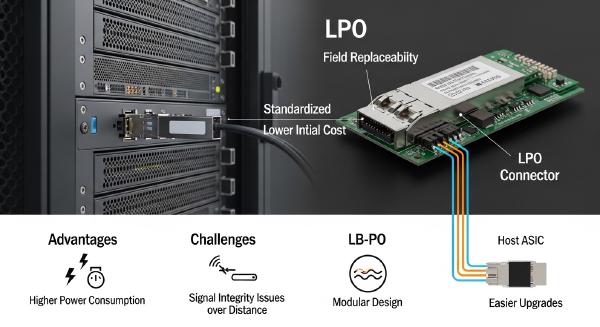
Traditional Pluggable Optics #
Conventional optical modules are installed at the edge of networking equipment, typically on the front panel of switches and servers.
Their primary role is to:
- Convert electrical signals into optical signals
- Support rack-to-rack connectivity
- Enable long-distance communication across data centers
- Remain serviceable and replaceable as discrete components
This architecture has served the industry well for decades due to its flexibility, maturity, and operational simplicity.
Co-Packaged Optics #
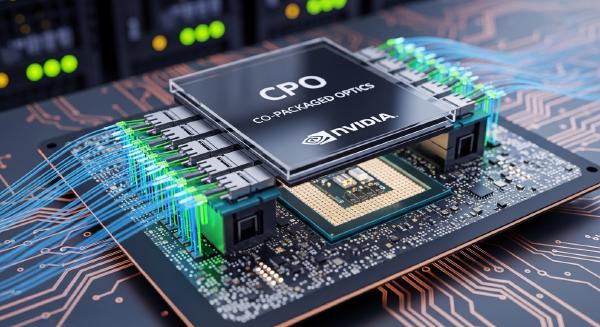
CPO fundamentally changes the location of optical signal conversion.
Instead of placing optical modules at the system edge, CPO integrates optical engines directly alongside:
- AI accelerators (XPUs)
- Switch ASICs
- Network processors
- High Bandwidth Memory (HBM)
All components reside within the same advanced packaging environment.
As electrical signals leave the compute silicon, they are immediately converted into optical signals, dramatically reducing the distance that high-speed electrical signals must travel.
This architectural shift offers several key benefits:
- Lower power consumption
- Reduced latency
- Improved signal integrity
- Higher bandwidth density
- Better scalability for AI clusters
These advantages become increasingly important as AI infrastructure scales to unprecedented sizes.
🔬 The Physical Limits of Traditional Interconnects #
The rapid growth of AI has exposed weaknesses in existing networking architectures.
Modern AI training clusters require enormous bandwidth between accelerators. As cluster sizes grow, copper-based interconnects face mounting challenges:
- Signal attenuation
- Increased power consumption
- Thermal constraints
- Routing complexity
- Limited transmission reach
Although pluggable optical modules alleviate some of these limitations, they still rely on relatively long electrical pathways between compute silicon and optical interfaces.
At smaller scales, this inefficiency is manageable.
At hyperscale AI deployments involving hundreds or thousands of accelerators, these inefficiencies become increasingly significant.
CPO addresses this challenge by moving optical connectivity directly into the package, significantly reducing the electrical path length and associated losses.
🏗️ Why Marvell Is Positioned Differently #
This shift fundamentally changes where value is captured within the optical interconnect ecosystem.
Traditional optical module vendors have historically specialized in:
- Optical module assembly
- Yield optimization
- Manufacturing scale
- Supply chain management
- Module qualification
These capabilities remain important, but CPO introduces a much broader engineering challenge.
Successful CPO implementation requires expertise across multiple disciplines:
- Silicon photonics
- High-speed SerDes design
- Advanced packaging
- Thermal engineering
- Switch architecture
- System-level optimization
This is where Marvell’s strengths become particularly relevant.
For years, Marvell has built a portfolio centered on data infrastructure technologies, including:
- Ethernet switching silicon
- Custom ASIC development
- High-speed networking solutions
- Optical interconnect technologies
- Silicon photonics platforms
Rather than approaching CPO as an optical module problem, Marvell views it as a semiconductor systems problem.
💡 Marvell’s CPO Architecture Strategy #
Marvell’s vision for CPO focuses on tightly integrating optical communication directly with AI compute infrastructure.
The company’s architecture combines:
- Custom AI accelerators
- High-speed networking silicon
- Silicon photonics engines
- High Bandwidth Memory
- Advanced packaging technologies
By integrating these elements within a unified package architecture, Marvell aims to overcome the bandwidth, density, and power limitations that emerge as AI clusters scale beyond individual racks.
This approach enables significantly more efficient communication between compute resources while reducing the overall energy cost of moving data throughout large AI systems.
As AI training and inference workloads become increasingly communication-intensive, interconnect efficiency is becoming nearly as important as raw compute performance.
🌐 Silicon Photonics Becomes a Strategic Asset #
One of Marvell’s most important competitive advantages lies in silicon photonics.
Silicon photonics enables optical communication technologies to be manufactured using semiconductor processes, allowing optical and electronic functions to be integrated more closely than ever before.
Key advantages include:
- Higher bandwidth density
- Lower power consumption
- Improved manufacturing scalability
- Better integration with advanced packaging technologies
As data center bandwidth requirements continue to grow exponentially, silicon photonics is increasingly viewed as a foundational technology for future AI infrastructure.
Marvell’s long-term investment in this area provides a strong foundation for its CPO ambitions.
🤝 Strengthening the Portfolio Through Strategic Acquisitions #
To accelerate its position in optical interconnect technologies, Marvell has also pursued targeted acquisitions aimed at expanding its capabilities.
The acquisition of Celestial AI significantly strengthens Marvell’s expertise in:
- Optical I/O architectures
- Chip-to-chip optical communication
- Photonic interconnect technologies
- In-package optical networking
Celestial AI’s Photonic Fabric technology is particularly notable because it enables optical communication engines to be tightly integrated with high-performance compute silicon.
This capability becomes increasingly important as AI accelerators continue to push power consumption and thermal limits.
By combining these technologies with its existing networking and packaging expertise, Marvell is building a comprehensive portfolio designed specifically for next-generation AI systems.
📈 How CPO Could Reshape the Value Chain #
One of the most important implications of CPO is its potential impact on industry economics.
Historically, significant value within optical networking was concentrated in pluggable optical modules.
As CPO adoption increases, value creation may increasingly shift toward:
- Semiconductor IP
- Silicon photonics
- Advanced packaging
- System architecture
- Interconnect design
- Thermal optimization
This transition represents a structural change rather than a simple product upgrade.
The industry may experience what can be described as a value inversion:
As optical functionality moves closer to compute silicon, more value migrates from module assembly toward chip design and integrated system engineering.
Companies with deep semiconductor expertise are therefore positioned to capture a larger portion of future industry value.
🔥 The AI Infrastructure Opportunity #
The rise of generative AI is accelerating demand for every component of the networking stack.
Future AI systems are expected to require:
- Massive east-west bandwidth
- Lower latency communication
- Improved power efficiency
- Higher rack-level compute density
- Greater scalability across data centers
Meeting these requirements will likely require a combination of innovations across networking, packaging, and optical technologies.
CPO is increasingly viewed as one of the most promising solutions to these challenges.
Because Marvell participates across multiple layers of the infrastructure stack—from networking silicon to photonics and custom AI architectures—it is uniquely positioned to benefit from this transition.
⚖️ Will Pluggable Optics Disappear? #
Despite the excitement surrounding CPO, traditional optical modules are unlikely to disappear anytime soon.
Pluggable optics continue to offer several advantages:
- Proven reliability
- Ease of replacement
- Operational flexibility
- Established supply chains
- Predictable deployment costs
For many applications, pluggable modules will remain the preferred solution for years to come.
However, as AI clusters continue to expand, the efficiency advantages of CPO may become increasingly difficult to ignore.
The transition is therefore likely to be gradual rather than abrupt, with both technologies coexisting across different deployment scenarios.
🎯 Conclusion #
The emergence of Co-Packaged Optics represents one of the most significant architectural shifts in modern data center networking. Rather than simply replacing pluggable optical modules, CPO fundamentally changes how optical communication is integrated into AI infrastructure.
This transition is shifting value creation away from traditional module assembly and toward semiconductor design, silicon photonics, advanced packaging, and system-level co-optimization.
Marvell’s extensive expertise across networking silicon, custom ASICs, high-speed SerDes, silicon photonics, and advanced packaging places the company in a uniquely advantageous position. As AI clusters continue to scale and networking bottlenecks become increasingly critical, Marvell’s integrated approach could make it one of the most influential players in the future of AI optical interconnects.
For investors and technology observers alike, understanding this shift is essential. The biggest beneficiaries of the CPO era may not be the companies assembling optical modules, but the companies designing the silicon architectures that make next-generation optical computing possible.