AMD CPUs Across Servers, Workstations, Desktops, and Mobile PCs
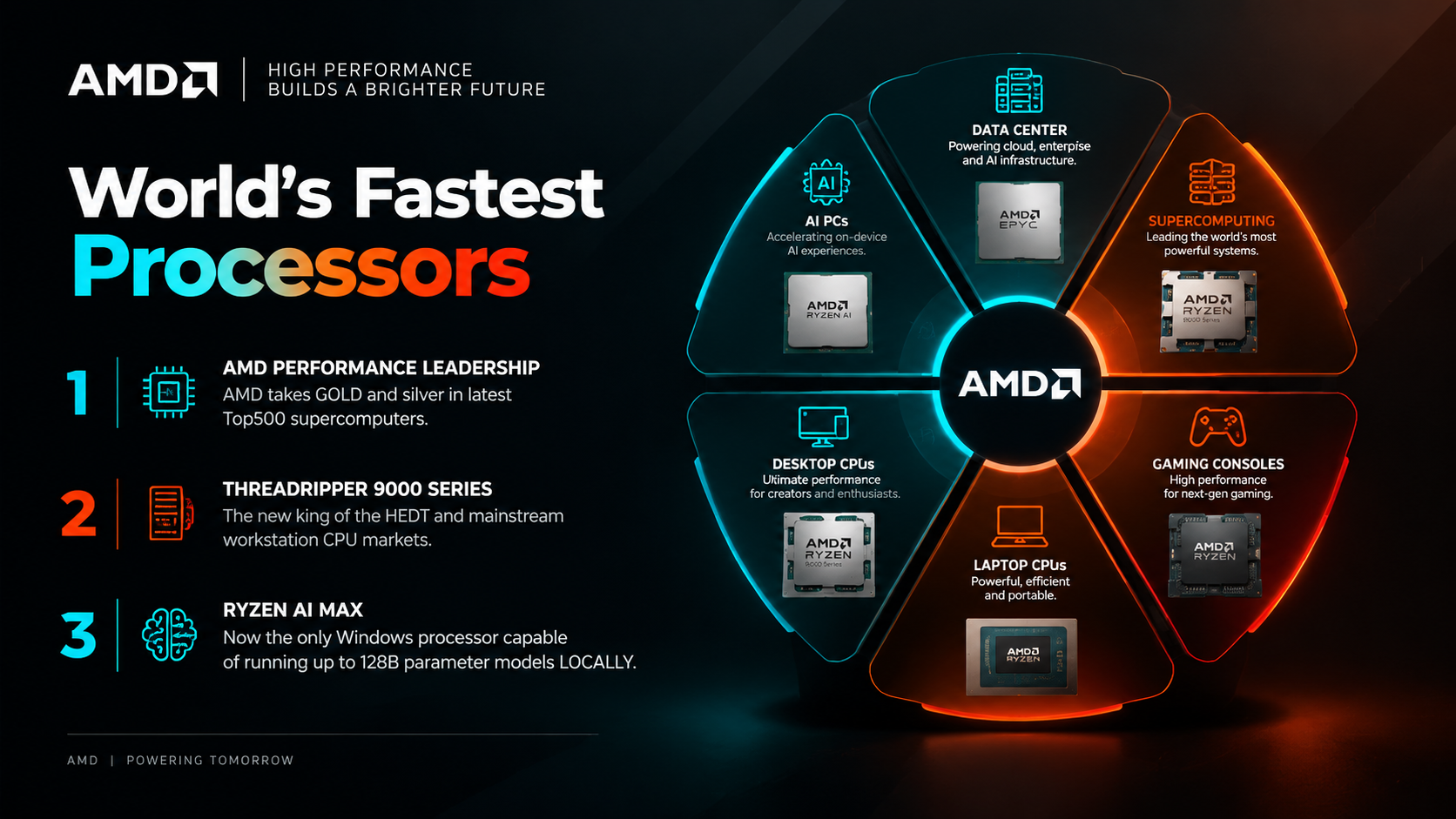
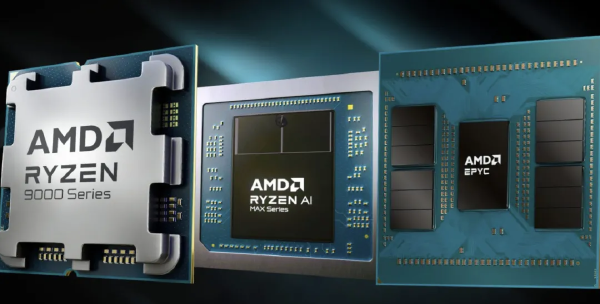
AMD has built a broad processor portfolio spanning data centers, professional workstations, gaming desktops, laptops, and handheld gaming systems. Its Zen architecture and chiplet-based designs have helped the company compete across several computing markets, although performance leadership varies by workload, product generation, price, and power limits.
In 2025, the Zen 5 family sits at the center of much of AMD’s strategy. Products such as EPYC 9005, Ryzen Threadripper 9000, Ryzen 9000, and Ryzen 9 9955HX3D target very different users, but share a focus on combining CPU performance with platform-level capabilities.
Rather than assuming AMD leads in every category, it is more useful to examine where each product family excels and how its specifications translate into practical benefits.
🖥️ Servers: EPYC Targets Data Centers and High-Performance Computing #
AMD’s EPYC processors are designed for cloud infrastructure, enterprise servers, scientific computing, virtualization, and other heavily parallel workloads. High core counts, memory bandwidth, and I/O capacity make the platform particularly attractive for organizations consolidating many workloads onto fewer servers.
The fifth-generation EPYC 9005 series uses Zen 5 and Zen 5c CPU cores, with selected models offering up to 192 cores and 384 threads per processor. The platform supports 12-channel DDR5 memory and PCIe 5.0 connectivity, providing substantial bandwidth for data-intensive applications.
These capabilities can benefit:
- Cloud computing: Higher core density can increase the number of virtual machines or containers supported by a server.
- Scientific computing: Parallel workloads can scale across many CPU cores, depending on the software.
- Databases and analytics: Memory bandwidth and capacity can be important for large, data-heavy workloads.
- AI infrastructure: EPYC CPUs can manage host-side processing, data preparation, and accelerator coordination alongside dedicated AI hardware.
AMD’s official EPYC 9005 processor overview provides model specifications and platform details.
AMD-powered systems have also achieved prominent results in supercomputing. El Capitan and Frontier, for example, have featured among the world’s leading supercomputers in TOP500 rankings. Their performance reflects complete systems—including CPUs, accelerators, interconnects, memory, and software—not simply the capabilities of one processor family.
The practical advantage of EPYC is therefore not just a high core count. It is the ability to balance compute density, memory capacity, I/O, and power consumption for a specific data-center workload.
🧰 Workstations: Threadripper for Professional Workloads #
AMD’s Ryzen Threadripper and Threadripper PRO families target users who need more CPU cores, memory bandwidth, and expansion options than mainstream desktop platforms typically provide.
The Threadripper 9000 series brings Zen 5 to high-end desktop workstations, while Threadripper PRO 9000 WX processors are designed for demanding professional systems. Depending on the model, these processors can support large core counts and extensive PCIe connectivity.
Typical workloads include:
- 3D rendering: CPU renderers can scale well across many cores, reducing completion times in suitably parallel scenes.
- Video production: Encoding, effects processing, and content pipelines can benefit from additional compute resources.
- Engineering and simulation: Some computational workloads scale with core count and memory bandwidth.
- Software development: Large builds and parallel test suites can benefit from additional threads.
The distinction between Threadripper and Threadripper PRO matters. Features such as memory-channel count, supported capacity, PCIe lanes, and workstation management capabilities vary by platform and processor model.
Performance comparisons also need to account for the exact chip and benchmark. A result from one rendering application does not establish universal leadership across all professional workloads. Buyers should compare independent tests that match their actual software, while considering system cost, cooling, and memory requirements.
🎮 Desktops: Ryzen 9000 and 3D V-Cache #
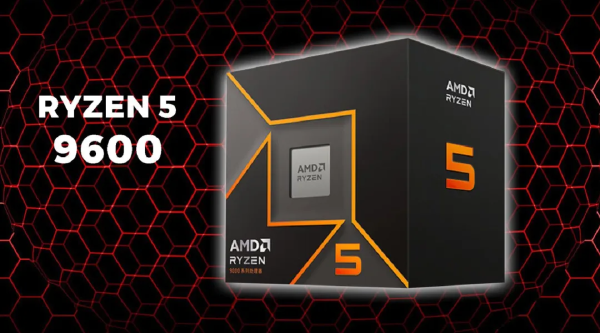
AMD’s Ryzen 9000 desktop family targets gaming, productivity, and general-purpose computing. Built on Zen 5, the lineup includes processors ranging from mainstream six-core models to high-end 16-core CPUs.
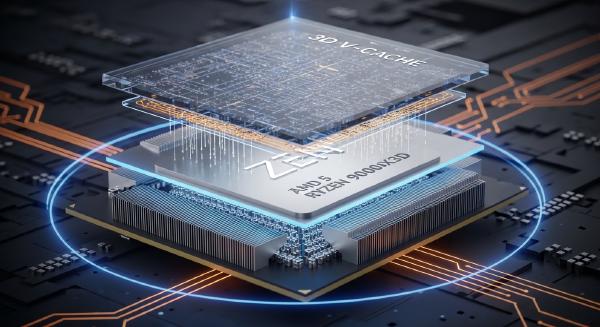
The Ryzen 9 9950X3D combines 16 cores and 32 threads with AMD’s 3D V-Cache technology. The enlarged cache can improve performance in games that are sensitive to memory access and cache capacity, although the size of the benefit varies by title.
Why 3D V-Cache Matters #
Modern games repeatedly access data associated with game worlds, characters, physics, and simulation. A larger L3 cache can keep more of that data close to the CPU cores, reducing some trips to system memory.
This can improve frame rates in CPU-limited scenarios, particularly when paired with a powerful graphics card at lower resolutions. At higher resolutions, the GPU often becomes the limiting component, reducing the differences between processors.
The Ryzen 9 9950X3D is also designed for users who combine gaming with heavily threaded productivity workloads. However, no single CPU is automatically the fastest choice in every game or application; results depend on the software, test conditions, and competing hardware.
For more cache-focused gaming context, see this article on the Ryzen 5 5500X3D and its potential as an AM4 upgrade. It explores a different price and performance tier, illustrating how 3D V-Cache can matter beyond flagship desktop systems.
💻 Mobile: Ryzen AI Max, Ryzen 9 9955HX3D, and Ryzen Z2 #
AMD’s mobile portfolio spans thin-and-light laptops, high-performance gaming notebooks, AI-focused PCs, and handheld gaming devices. These products share parts of the broader Ryzen ecosystem but have different power, cooling, and graphics constraints.
Ryzen AI Max #
The Ryzen AI Max family combines Zen 5 CPU cores, integrated Radeon graphics, and an XDNA 2 neural processing unit in a single package. Selected models offer an NPU rated at up to 50 TOPS.
This design targets creators, developers, and other users who benefit from local AI acceleration alongside CPU and GPU computing. Systems with large unified-memory configurations can also accommodate models and workloads that would be constrained by the memory capacity of a conventional laptop.
Nevertheless, the ability to run a particular AI model depends on more than NPU TOPS. Memory capacity, quantization, software support, and whether a workload runs on the CPU, GPU, or NPU all influence practical results. A high parameter count alone does not guarantee acceptable performance.
Ryzen 9 9955HX3D #
The Ryzen 9 9955HX3D brings Zen 5 and second-generation 3D V-Cache to high-performance gaming laptops. It features 16 cores, 32 threads, and a maximum boost clock of up to 5.4GHz.
Its large cache can help in CPU-sensitive games, but laptop performance depends heavily on the system’s cooling design, configured power limits, and graphics hardware. A laptop using this processor will not necessarily match a desktop with a similar core count, and results can vary substantially between notebook designs.
AMD’s official Ryzen 9 9955HX3D specifications provide more detail on its architecture, cache, power range, and connectivity.
Ryzen Z2 and Handheld Gaming #
The Ryzen Z2 family targets handheld gaming PCs, where performance must be balanced against battery life, heat, and compact cooling systems. Models differ in CPU architecture and integrated graphics capabilities, so the Z2 name alone does not establish a particular performance level.
For handhelds, real-world results depend on the game, resolution, graphics settings, memory configuration, and power target. Comparisons should use the same device conditions and include frame-time consistency and battery life, not just peak frame rates.
🔮 Zen 5 and AMD’s Chiplet Strategy #
Zen 5 is a central part of AMD’s current CPU portfolio. AMD has emphasized improvements to the core architecture and instructions-per-clock performance compared with Zen 4, though the realized gains vary by workload and processor configuration.
Several design choices help AMD adapt the architecture to different markets.
- Chiplet-based scaling: Separating CPU core dies from other parts of the processor allows AMD to build products with different core counts and configurations.
- Product segmentation: Ryzen, Threadripper, and EPYC can use related architectural foundations while targeting different power, memory, and I/O requirements.
- Cache specialization: 3D V-Cache allows selected processors to increase cache capacity for workloads that benefit from it.
- Integrated acceleration: Mobile Ryzen AI products combine CPU cores with graphics and dedicated AI hardware.
Chiplets can improve manufacturing flexibility and make it easier to reuse design blocks across product families. However, performance and efficiency still depend on interconnects, memory access, software optimization, manufacturing processes, and power management.
Zen 5 should therefore be viewed as a family of related designs rather than a guarantee that every processor will outperform every competing product.
📊 AMD’s Competitive Position Across Market Segments #
AMD competes with Intel in mainstream CPUs, high-performance desktops, laptops, workstations, and servers. Its position differs by segment, and market share, benchmark leadership, and commercial adoption measure different things.
| Market segment | AMD’s main strengths | Important considerations |
|---|---|---|
| Servers | High core counts, memory bandwidth, and EPYC platform capabilities | Software licensing, platform cost, workload scaling, and power efficiency |
| Workstations | Threadripper options with substantial compute and expansion capacity | Memory requirements, cooling, application support, and total system price |
| Gaming desktops | Ryzen X3D cache technology and strong gaming performance in suitable titles | Game-specific results, GPU limits, and platform cost |
| Laptops | Broad Ryzen range, including high-performance and AI-focused processors | Laptop cooling, battery life, manufacturer power settings, and integrated graphics |
| Handheld PCs | Ryzen Z-series options designed for compact gaming systems | Power limits, battery capacity, thermal constraints, and device implementation |
AMD has made substantial gains in several of these areas, but it does not lead every benchmark or dominate every market segment. Intel remains a significant competitor, and the best processor choice depends on the workload and budget.
Market-share estimates should also specify the source, reporting period, and metric used. Desktop CPU sales, server revenue, installed base, and benchmark results describe different aspects of competition and should not be treated as interchangeable.
⚖️ Challenges and the Road Ahead #
Despite its broad product range, AMD faces several continuing challenges.
- Software optimization: Performance depends on compilers, operating systems, application tuning, and support for technologies such as AMD’s ROCm software stack.
- Platform cost: High-end Threadripper and EPYC systems can require expensive motherboards, memory, cooling, and power delivery.
- Mobile implementation: Laptop manufacturers determine much of a system’s thermal behavior, battery life, and sustained performance.
- Intense competition: Intel and other computing-platform vendors continue to compete on performance, efficiency, integrated graphics, and AI acceleration.
- Product-specific value: A newer architecture is not necessarily the best purchase if an older processor delivers sufficient performance at a lower total cost.
Future progress will depend not only on faster CPU cores but also on memory systems, packaging, software, and how effectively complete platforms use their available resources.
🏁 Final Thoughts #
AMD’s portfolio reaches from high-core-count EPYC servers and Threadripper workstations to Ryzen gaming desktops, AI-capable laptops, and handheld gaming systems. Zen 5 and chiplet-based design provide a shared foundation for many of these products, while cache technology and platform specialization help address different workloads.
That breadth is a significant competitive advantage, but claims of universal leadership need to be evaluated carefully. EPYC should be judged by server and compute workloads, Threadripper by professional applications, Ryzen by desktop performance and value, and mobile processors by performance under realistic power and cooling limits.
For buyers, the most useful approach is to compare specific models against their intended workloads, independent benchmarks, platform costs, and power requirements. AMD offers compelling options across the market, but the best CPU is the one that delivers the right balance of performance, efficiency, compatibility, and price for the system being built.