AMD GPU Sales Surge in Retail, but Nvidia Still Dominates
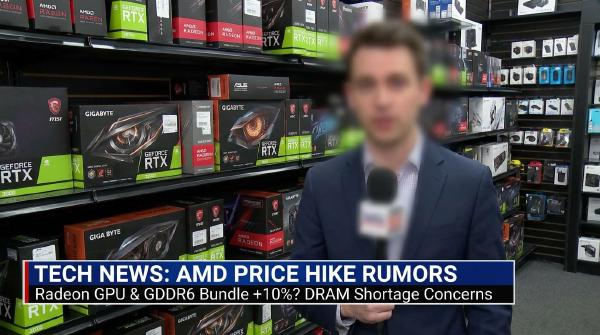
AMD’s Radeon graphics cards have recently gained significant momentum in several retail channels, with the Radeon RX 9070 XT reaching the top of Amazon’s GPU bestseller rankings and AMD capturing nearly 56% of weekly graphics card sales at German retailer Mindfactory.
These results indicate that AMD is successfully converting favorable pricing and product availability into incremental retail sales. However, they should not be interpreted as evidence of a fundamental shift in the global discrete GPU market.
The distinction is important: retail sales measure new purchases over a limited period, while installed-base data reflects the much larger population of GPUs already in use.
Nvidia continues to hold a substantial advantage in the global installed base, particularly among Steam users. AMD’s recent retail gains therefore represent a meaningful improvement in competitive positioning, but not yet a structural reversal of the GPU market.
📈 AMD Gains Ground in Key Retail Channels #
Recent retail data provides several signals that AMD’s Radeon lineup is becoming more competitive with Nvidia’s GeForce products.
According to data reported by TechSpot and previously shared by X user TechEpiphany, AMD and Nvidia each occupied five positions in Amazon’s top-ten graphics card bestseller ranking.
The exact ranking fluctuates over time, but the Radeon RX 9070 XT has remained particularly strong and reached the top position.
Amazon bestseller rankings #
AMD’s products appearing prominently in the ranking include:
- ASUS Radeon RX 9070 XT
- ASRock Radeon RX 9070
- ASUS Radeon RX 9060 XT
Nvidia’s representation includes:
- GeForce RTX 5070
- GeForce RTX 5060 Ti
- Two GeForce RTX 5080 variants
The pricing of these cards also illustrates the current supply environment. The top-ranked Gigabyte RX 9070 XT was reportedly selling for approximately $749, significantly above its $599 launch MSRP.
This means AMD’s retail momentum is occurring despite elevated GPU pricing rather than because Radeon products have universally returned to launch-level pricing.
Mindfactory shows a stronger AMD lead #
Data from German retailer Mindfactory provides an even more pronounced example.
During the reported period:
- AMD represented approximately 56% of weekly GPU unit sales.
- Nvidia represented approximately 40%.
- Mindfactory sold 2,810 graphics cards in August 2026.
- AMD accounted for approximately 1,570 units.
- Nvidia sold slightly more than 1,100 units.
- The RX 9070 XT was the best-selling individual model, followed closely by the RX 9060.
These figures demonstrate that AMD can capture substantial retail unit share when its products combine competitive performance, pricing, and availability.
However, Mindfactory should not be treated as a proxy for the entire German or global GPU market.
💰 Price and Availability Are Driving Buyer Decisions #
The recent retail shift is also a reminder that GPU purchasing decisions are highly sensitive to price and inventory availability.
VRAM supply constraints are putting upward pressure on graphics card prices across both AMD and Nvidia product lines. When similarly positioned GPUs become more expensive, even relatively small differences in street pricing can materially affect consumer demand.
AMD currently benefits from competitive positioning in several product segments, particularly when Radeon cards are available below comparable GeForce alternatives.
Availability can outweigh brand preference #
Inventory is another important variable.
In the cited Amazon snapshot, three AMD graphics cards were readily available for immediate shipment, while only one Nvidia model was directly purchasable.
The available Nvidia option was a Gigabyte RTX 5080 priced at approximately $1,599, even after a reported 6% discount.
For a consumer who needs a GPU immediately, the decision is therefore influenced by more than benchmark performance.
The practical purchase equation becomes:
Performance + price + availability + feature requirements
rather than simply:
AMD vs Nvidia
This is especially important during periods of constrained supply. A product that is competitively priced and physically available can capture demand from buyers who would otherwise have selected a competing brand.
🌍 Installed Base Still Favors Nvidia #
Despite AMD’s recent retail performance, the broader GPU landscape remains heavily tilted toward Nvidia.
The most important distinction is between sales share and installed-base share.
Steam’s Hardware Survey provides a view of the GPUs actively used by a large PC gaming population. In the cited data, Nvidia accounts for roughly 73% of the installed GPU base, compared with approximately 18.6% for AMD.
| Platform / Metric | Nvidia Share | AMD Share |
|---|---|---|
| Steam Hardware Survey | ~73% | 18.6% |
| Mindfactory GPU Sales, Aug. 2026 | ~40% | ~56% |
The contrast is substantial.
Mindfactory’s August sales data indicates that AMD can temporarily outsell Nvidia in a specific retail channel, while Steam’s installed-base data shows that Nvidia remains far ahead among GPUs already deployed in active gaming systems.
These metrics measure different things and should not be directly substituted for one another.
Why installed base changes slowly #
Installed-base share naturally moves more slowly than retail sales share.
Suppose AMD dramatically increases its monthly unit sales. Those new GPUs still represent only a small addition to the millions of graphics cards already deployed.
A sustained improvement in new-unit sales must continue for multiple product generations before it can produce a major change in the installed base.
This is why a strong quarter or a successful GPU generation does not immediately translate into market dominance.
🧩 Mindfactory’s AMD Bias Matters #
Mindfactory’s results are useful for tracking enthusiast purchasing behavior, but the retailer has historically shown stronger AMD representation than the broader market.
Promotions, discounts, bundles, regional preferences, and product availability can all influence the retailer’s sales mix.
Consequently, the reported 56% AMD unit share should be interpreted as a channel-specific data point rather than a global market-share figure.
There is also an important distinction between unit revenue and unit volume.
Nvidia’s products generally carry higher average selling prices (ASP). As a result, Nvidia can generate a larger share of revenue even when AMD sells more individual graphics cards.
This creates three different metrics that can tell different stories:
- Unit share: How many GPUs each vendor sells.
- Revenue share: How much sales value each vendor generates.
- Installed-base share: How many GPUs from each vendor are already in use.
A vendor can lead one metric without leading the others.
⚖️ AMD’s Retail Momentum Is Real, but the Market Has Not Flipped #
The recent performance of the RX 9070 XT and other Radeon products should not be dismissed.
AMD has demonstrated that it can capture meaningful retail demand when it delivers an attractive combination of performance, pricing, and supply.
The RX 9070 XT reaching the top of a major online bestseller ranking is particularly useful evidence that Radeon products can compete effectively for enthusiast buyers.
The Mindfactory results reinforce the same point from another angle: under favorable channel conditions, AMD can achieve a substantial unit-sales advantage over Nvidia.
But describing this as AMD “dominating the GPU market” would be misleading.
The current evidence instead points to a channel-specific sales shift occurring within a much larger Nvidia-dominated installed base.
🔮 What Determines Whether AMD Can Sustain the Gains #
AMD’s next challenge is converting short-term retail momentum into sustained market-share growth.
Several factors will determine whether the current trend persists:
Pricing #
AMD needs to maintain competitive street pricing relative to Nvidia’s comparable products. If Radeon GPUs lose their price-performance advantage, some of the current retail momentum could disappear quickly.
Supply #
Consistent inventory is equally important. Strong products cannot capture market share if consumers cannot purchase them when they need a GPU.
Product segmentation #
AMD’s ability to compete across multiple price tiers will determine whether gains remain concentrated around a few successful models or expand across the Radeon portfolio.
Software and platform differentiation #
GPU purchasing decisions are also influenced by software ecosystems, AI features, upscaling technologies, ray tracing performance, creator workloads, and application compatibility.
Hardware performance alone therefore does not determine long-term market share.
Regional channel strategy #
The Mindfactory example also demonstrates how regional distribution, promotions, and retailer-specific purchasing patterns can produce results that differ significantly from global trends.
AMD’s ability to reproduce strong performance across multiple retailers and geographic markets will be more meaningful than any single channel ranking.
📊 Retail Momentum vs. Market Structure #
The current GPU market can therefore be understood through two simultaneous trends.
At the retail level, AMD is showing stronger competitive momentum. The RX 9070 XT is performing well, Radeon products are appearing prominently in bestseller rankings, and AMD has achieved a significant unit-sales lead at Mindfactory.
At the installed-base level, Nvidia remains overwhelmingly dominant. The gap in active GPU deployment is still far larger than the recent retail sales gap.
The two observations are not contradictory.
In fact, AMD’s recent retail performance is exactly the kind of sustained improvement that could eventually narrow the installed-base gap—but only if the company can maintain competitive pricing, reliable supply, strong products, and compelling software support over multiple generations.
For now, the most accurate conclusion is straightforward:
AMD is gaining ground in selected retail channels, but Nvidia still controls the broader GPU installed base.
The RX 9070 XT demonstrates that AMD can win meaningful pockets of the market when the product, price, and inventory conditions align. Whether those pockets become a broader market-share trend will depend on how consistently AMD can reproduce that formula across regions, retailers, and future GPU generations.