AMD Ryzen AI PRO 400 and 9965X3D Launching in Q3 2026
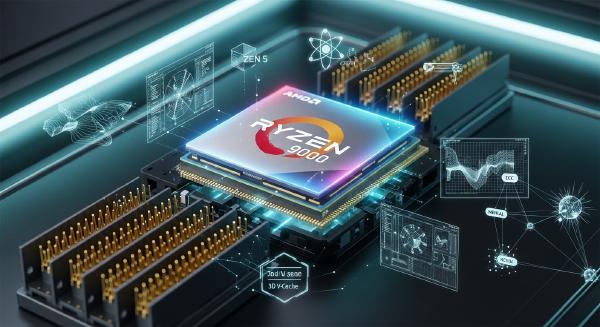
At COMPUTEX 2026, AMD unveiled two major additions to its commercial processor portfolio: the Ryzen AI PRO 400 series desktop APUs and the Ryzen 9 PRO 9965X3D, the industry’s first commercial workstation processor equipped with AMD’s 3D V-Cache technology.
Scheduled for release in the third quarter of 2026, these new processors bring AMD’s latest innovations—including Zen 5 CPU cores, XDNA 2 AI acceleration, RDNA 3.5 graphics, and 3D V-Cache—to the professional and enterprise market. According to AMD, the new lineup can deliver up to 19% higher performance than competing solutions while operating at comparable power levels.
For organizations planning desktop or workstation refresh cycles, these launches represent some of the most significant commercial CPU announcements of the year.
🚀 AMD Expands Its PRO Portfolio #
The introduction of the Ryzen AI PRO 400 series and Ryzen PRO X3D workstation processors marks the first time AMD has brought several flagship consumer technologies into its commercial lineup simultaneously.
Key technologies now available in AMD’s PRO ecosystem include:
- Zen 5 CPU architecture
- XDNA 2 AI acceleration
- RDNA 3.5 integrated graphics
- 3D V-Cache technology
- Copilot+ PC support
- Advanced enterprise security and manageability features
Together, these products address a broad range of commercial workloads, from standard office productivity and AI-assisted workflows to professional content creation, engineering, and rendering applications.
🖥️ Ryzen AI PRO 400 Series: AI-Powered Commercial Desktops #
The Ryzen AI PRO 400 family is designed for enterprise desktops that require a balance of performance, efficiency, and local AI processing.
Built on AMD’s Zen 5 architecture, the platform combines desktop-class CPU performance with integrated AI acceleration and modern graphics capabilities.
Key Platform Features #
The Ryzen AI PRO 400 series includes:
- Zen 5 CPU cores
- RDNA 3.5 integrated graphics
- XDNA 2 NPU
- Up to 50 TOPS of AI performance
- AM5 platform compatibility
- Copilot+ PC support
The inclusion of a 50 TOPS neural processing unit places these chips among the first desktop-class commercial processors capable of meeting Microsoft’s Copilot+ PC requirements.
This enables AI workloads to run locally, reducing reliance on cloud infrastructure while improving privacy and responsiveness.
⚙️ Product Lineup Overview #
AMD has introduced six processors across two primary product categories.
65W G-Series Models #
These models include integrated graphics and target mainstream commercial desktops.
Ryzen AI 7 PRO 450G #
The flagship model features:
- 8 cores
- 16 threads
- Up to 5.1GHz boost frequency
- Radeon 860M graphics
- 8 RDNA 3.5 compute units
Ryzen AI 5 PRO Models #
These processors offer:
- 6 cores
- 12 threads
- Up to 4.8GHz boost frequency
- Radeon 840M graphics
- 4 compute units
35W GE-Series Models #
The lower-power GE variants target compact, energy-efficient business systems and specialized deployments where thermal and power budgets are critical.
🤖 Local AI Performance Takes Center Stage #
One of the defining characteristics of the Ryzen AI PRO 400 series is its focus on local AI execution.
With the integrated XDNA 2 NPU providing up to 50 TOPS of performance, organizations can run AI-assisted workloads directly on employee devices.
Potential use cases include:
- AI-powered productivity assistants
- Document summarization
- Meeting transcription
- Workflow automation
- Enterprise search
- Local inference applications
Because data processing occurs locally, businesses can reduce privacy concerns associated with cloud-based AI services while maintaining compliance with internal security policies.
📊 Performance and Efficiency Improvements #
AMD highlighted both performance and energy efficiency gains compared to competing commercial desktop processors.
According to AMD’s internal benchmarks, the Ryzen AI 7 PRO 450G delivers:
- 14% higher performance than Intel Core Ultra 7 265
- 17% better energy efficiency at the same 65W power level
For organizations deploying hundreds or thousands of systems, improved efficiency can translate into:
- Lower operating costs
- Reduced cooling requirements
- Smaller form factors
- Quieter office environments
This makes the platform particularly attractive for modern enterprise deployments where power consumption is increasingly scrutinized.
🏢 OEM Availability and Deployment Strategy #
Initially, AMD will distribute Ryzen AI PRO 400 processors through major enterprise OEM partners rather than the DIY retail channel.
Launch partners include:
- Dell
- HP
- Lenovo
This approach reflects the processor’s commercial focus, where centralized procurement and fleet management often take priority over custom-built systems.
Retail versions are expected to become available later, although AMD has not provided a specific timeline.
💪 Ryzen 9 PRO 9965X3D: Bringing 3D V-Cache to Workstations #
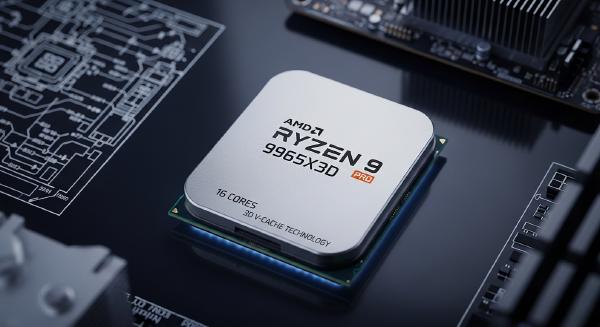
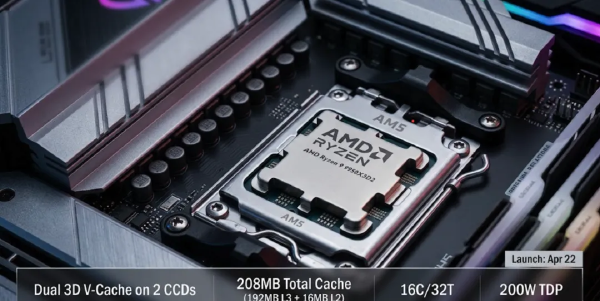
Alongside the AI-focused desktop lineup, AMD introduced the Ryzen 9 PRO 9965X3D, the first commercial workstation processor featuring 3D V-Cache technology.
Originally developed to accelerate gaming and cache-sensitive workloads, 3D V-Cache is now being applied to professional applications that benefit from larger on-chip memory pools.
Ryzen 9 PRO 9965X3D Specifications #
The flagship workstation processor includes:
- 16 cores
- 32 threads
- Up to 5.5GHz boost clock
- 128MB total L3 cache
- 170W TDP
This configuration targets professionals working with demanding compute-intensive applications.
Ryzen 7 PRO 9755X3D #
AMD also introduced a more accessible X3D workstation option:
- 8 cores
- 16 threads
- Up to 5.2GHz boost clock
- 96MB total L3 cache
- 170W TDP
Together, the two processors provide scalable workstation performance across different budget levels.
🎨 Workstation Performance Gains #
AMD showcased benchmark results across several professional content creation and visualization workloads.
Compared with the Intel Core Ultra 9 285K, the Ryzen 9 PRO 9965X3D reportedly delivers:
- 13% higher performance in Autodesk Maya
- 9% higher performance in Unreal Engine
- 19% higher performance in Chaos V-Ray rendering
These improvements can directly impact productivity in professional environments by reducing:
- Rendering times
- Simulation wait periods
- Compilation delays
- Interactive viewport bottlenecks
For content creators and engineers, even modest percentage gains can translate into significant time savings over the course of large projects.
🏗️ Early Workstation Adoption #
The Lenovo ThinkStation P4 is expected to be among the first commercial workstations featuring the Ryzen 9 PRO 9965X3D.
This partnership highlights AMD’s growing presence in the professional workstation market, an area traditionally dominated by Intel and specialized workstation-class processors.
As additional OEM systems launch throughout Q3 2026, organizations will gain more options for deploying AMD-based workstation infrastructure.
📈 Choosing Between the Two Platforms #
While both product families target commercial customers, they serve distinct roles.
Ryzen AI PRO 400 Series #
Best suited for:
- Enterprise desktop deployments
- Office productivity workloads
- Local AI applications
- Small-form-factor systems
- Energy-efficient computing
Key advantages include:
- Lower power consumption
- Integrated AI acceleration
- Compact deployment options
- Copilot+ compatibility
Ryzen PRO X3D Workstation Processors #
Best suited for:
- 3D rendering
- CAD and engineering
- Game development
- Visual effects production
- Professional content creation
Key advantages include:
- Higher multi-threaded performance
- Massive cache capacity
- Faster rendering workflows
- Improved interactive responsiveness
🔍 Procurement Considerations #
Organizations planning hardware refreshes in late 2026 may benefit from waiting for these products before making major purchasing decisions.
Factors worth evaluating include:
- AI workload requirements
- Power efficiency targets
- Workstation performance needs
- Total cost of ownership
- Software compatibility
- Vendor ecosystem support
Given the claimed performance improvements and the integration of next-generation AI capabilities, these processors could offer a substantially longer useful lifespan than existing commercial platforms.
🏁 Conclusion #
AMD’s Ryzen AI PRO 400 series and Ryzen 9 PRO 9965X3D represent a significant expansion of the company’s commercial computing portfolio. By combining Zen 5 architecture, XDNA 2 AI acceleration, RDNA 3.5 graphics, and 3D V-Cache technology, AMD is bringing many of its most successful consumer innovations into the enterprise and workstation markets.
The Ryzen AI PRO 400 series targets organizations seeking efficient, AI-ready desktop systems with strong local processing capabilities, while the Ryzen PRO X3D lineup addresses the needs of professionals working in rendering, simulation, engineering, and content creation.
With both product families scheduled for release in Q3 2026, businesses planning desktop or workstation upgrades should closely evaluate these platforms before committing to existing-generation hardware. The combination of improved performance, AI acceleration, and energy efficiency may make them among the most compelling commercial processors available in the coming year.