CPO Deployment Timeline Reassessed: SemiAnalysis Report Signals Delayed Mass Adoption
📡 CPO Expectations Meet a Reality Check in 2026 #
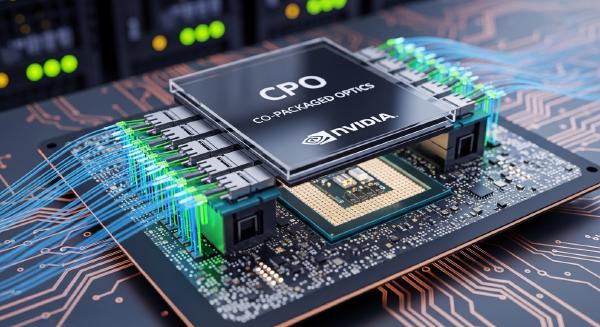
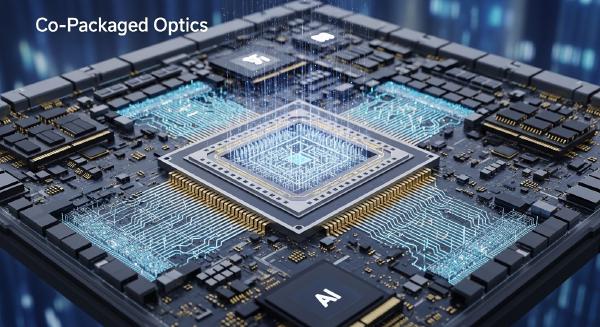
Co-Packaged Optics (CPO), long positioned as a foundational shift in data center interconnect architecture, is facing renewed scrutiny after a SemiAnalysis report released on June 9, 2026. The report argues that several widely expected milestones—particularly around 2027 deployment—may be overly optimistic, with meaningful scale-up adoption potentially shifting toward 2028–2029.
This reassessment has introduced volatility across optical component equities and forced a broader re-evaluation of the industry’s deployment curve assumptions.
📉 Timeline Compression vs Engineering Reality #
The central tension highlighted by the report is not whether CPO will succeed, but how fast it can realistically scale.
Revised expectations include:
- Native single-ended 800VDC rollout potentially delayed beyond 2028
- Scale-out CPO adoption pushed out of the 2026–2027 window
- Scale-up CPO mass deployment potentially slipping toward 2029
This directly challenges prior market assumptions that compressed the entire production lifecycle—from early validation to hyperscale deployment—into a narrow two-year window.
💡 Why the Market Repriced the Entire Optical Stack #
The immediate repricing across optical communication equities reflects how tightly CPO expectations are embedded in forward earnings models.
Key sensitivity drivers include:
- High-margin optical engine demand forecasts
- Hyperscale AI cluster build-out assumptions
- Packaging yield and system-level integration timelines
- Transition speed from pluggable optics to integrated photonics
When timelines shift, even by 12–24 months, the expected revenue inflection points for the entire ecosystem move accordingly, triggering sector-wide valuation resets.
🧱 The Real Bottleneck: System-Level Yield Complexity #
While CPO has progressed beyond early R&D stages, scaling it introduces non-linear manufacturing challenges that do not exist in pluggable optics.
Key constraints include:
- Yield multiplication effects in tightly integrated optical-electrical systems
- Reduced serviceability once optics are embedded near ASICs
- Increased difficulty of failure isolation and replacement
- Complex thermal and packaging interactions in dense substrates
Unlike modular transceivers, CPO shifts reliability from component-level repairability to full-system integrity, amplifying the impact of even minor defect rates.
🏗️ Diverging Corporate Strategies Across the Stack #
Industry participants are not aligned on a single deployment path, instead pursuing parallel optical strategies.
Platform and System Vendors #
- NVIDIA continues advancing integrated networking architectures (e.g., Spectrum-X and future photonics-enabled systems), influencing how CPO is evaluated in AI clusters.
- Hyperscale system design increasingly determines optical adoption pace more than standalone component readiness.
Switch Silicon Leaders #
- Broadcom has demonstrated production-grade CPO implementations in switching environments, validating technical feasibility while still hedging with alternative architectures like pluggables and VCSEL-based approaches.
Semiconductor and Packaging Ecosystem #
- Marvell and TSMC are focusing on advanced packaging integration (chiplets, CoWoS, silicon photonics co-integration), where optical scaling becomes a heterogeneous system design problem rather than a standalone optics challenge.
🔁 Interim Architectures: NPO and LPO as Transition Layers #
Between traditional pluggable optics and full CPO deployment, intermediate architectures are gaining importance:
- LPO (Linear-drive Pluggable Optics): Maintains modularity while improving efficiency
- NPO (Near-Packaged Optics): Reduces electrical path length without full integration
- High-speed pluggables (800G/1.6T): Continue scaling in parallel with AI infrastructure demand
These transitional technologies help extend the economic lifetime of existing data center architectures while CPO matures.
📊 Market Implications for Optical Supply Chains #
For optical module suppliers and component vendors, the timeline adjustment does not imply demand destruction but rather demand redistribution over a longer cycle.
Structural implications include:
- Extended revenue runway for pluggable optics (800G and 1.6T)
- Slower but steadier ramp of next-gen integrated photonics
- Continued coexistence of multiple interconnect standards
- Increased importance of hybrid deployment strategies in hyperscale data centers
The transition is increasingly shaped by portfolio evolution rather than abrupt technology replacement.
📌 Conclusion: Not a Reset, but a Recalibration #
The SemiAnalysis report does not negate the long-term direction of Co-Packaged Optics. Instead, it reframes the industry’s central question from “Will CPO scale?” to “How quickly can it scale without breaking system economics and yield constraints?”
CPO remains a foundational architecture for future AI and hyperscale networking, but its path to dominance appears more gradual, multi-phased, and heterogeneous than earlier consensus forecasts suggested. The near-term focus shifts toward incremental deployments, intermediate optical architectures, and resolving the manufacturing complexity that governs true high-volume adoption.