Samsung’s 4nm Yield Hits 80% as AI Chip Orders Accelerate
Samsung’s semiconductor foundry business may be entering a critical turning point.
According to reports from South Korean media, Samsung’s 4nm manufacturing process has now achieved an 80% yield rate, signaling that the company’s SF4X node has entered the mature mass-production phase. At the same time, Samsung has reportedly secured multiple foundry customers across the AI and enterprise chip sectors, including Groq, IBM, and Baidu.
The development is significant because it positions Samsung as an increasingly viable alternative to TSMC in segments where advanced-node capacity remains heavily constrained.
While Samsung still trails TSMC at the leading edge, particularly in 2nm manufacturing, its improving 4nm economics and available capacity could reshape portions of the AI inference and mid-range semiconductor markets.
🏭 Samsung’s 4nm Yield Reaches Mass-Production Readiness #
In semiconductor manufacturing, yield rate is one of the most important indicators of process maturity.
Yield refers to the percentage of functional chips successfully produced from a batch of wafers. Higher yields directly reduce manufacturing costs and improve delivery stability for customers.
When Samsung initially launched mass production of its SF4X 4nm node in late 2023, reported yields were only slightly above 50%. At those levels, nearly half of the produced wafers contained defects, significantly increasing production costs and reducing confidence among potential customers.
According to industry standards, advanced-node yields consistently exceeding 75% are generally considered mature enough for stable large-scale commercial production.
Reports now indicate Samsung’s 4nm process has reached approximately 80% yield, marking a substantial improvement in process stability and manufacturing efficiency.
This milestone is particularly important because foundry customers prioritize not only raw performance, but also predictable delivery timelines and reliable volume scalability.
🤖 AI Chip Orders Begin Flowing to Samsung #
Samsung’s improving process maturity appears to be attracting a growing number of AI and enterprise semiconductor clients.
One of the most notable reported customers is Groq, the AI chip company backed by NVIDIA.
Groq specializes in inference-focused AI accelerators known as LPUs (Language Processing Units), designed specifically for high-speed AI inference workloads.
Groq’s Next-Generation AI Accelerators #
Groq previously announced in 2023 that its second-generation LPU chips would be manufactured using Samsung’s SF4X process.
More recently, reports claim Samsung has secured production for Groq’s third-generation inference accelerator platform, officially referred to as the NVIDIA Groq 3 LPX, unveiled during NVIDIA GTC 2026.
The chip reportedly serves as a companion inference accelerator alongside NVIDIA’s Rubin AI platform.
According to earlier media reports, NVIDIA CEO Jensen Huang publicly confirmed Samsung’s involvement in manufacturing Groq’s third-generation LPU chips, providing a major credibility boost for Samsung’s advanced-node foundry business.
Additional Customers Across Multiple Markets #
Beyond Groq, Samsung has reportedly secured orders involving:
- IBM enterprise processors
- Baidu AI chips
- Cryptocurrency mining hardware manufacturers
These wins suggest Samsung is becoming increasingly competitive in markets where:
- Cost efficiency matters heavily
- Supply availability is constrained
- Cutting-edge 2nm nodes are unnecessary
- AI inference workloads dominate
☁️ Samsung Benefits From TSMC Capacity Constraints #
One of Samsung’s biggest opportunities comes from broader industry supply dynamics.
Currently, TSMC’s leading-edge 3nm and 4nm capacity remains heavily allocated to major customers such as:
- Apple
- NVIDIA
This has created long lead times for many smaller and mid-sized semiconductor firms, with some reportedly facing wait times exceeding six months.
Samsung is leveraging this market imbalance by offering:
- More available manufacturing capacity
- Lower foundry pricing
- Faster delivery timelines
Reports suggest Samsung’s 4nm pricing is approximately 20% lower than comparable TSMC offerings.
This combination is particularly attractive for:
- AI inference accelerators
- Mid-range mobile SoCs
- Enterprise accelerators
- Crypto mining chips
Unlike flagship training GPUs, these products are often more sensitive to manufacturing costs and supply-chain flexibility than absolute leading-edge performance.
⚙️ Samsung Still Trails TSMC at 2nm #
Despite the progress at 4nm, Samsung still faces major challenges at the industry’s most advanced process nodes.
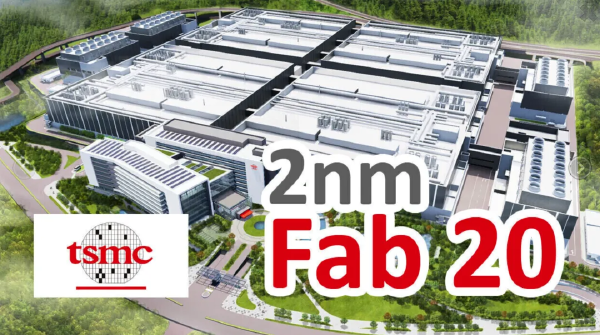
Public reports indicate Samsung’s current 2nm yields remain below 60%, while TSMC’s 2nm process is reportedly approaching 90% yield.
As a result, TSMC continues to dominate the highest-end semiconductor manufacturing market, particularly for flagship AI training accelerators and premium consumer chips.
At least in the near term, Samsung is unlikely to displace TSMC’s leadership position in bleeding-edge manufacturing.
Samsung’s Current Strategy Focus #
Instead, Samsung appears to be concentrating on a different segment of the market:
- Mature advanced nodes
- Cost-sensitive AI chips
- Mid-to-high-end consumer semiconductors
- Flexible capacity allocation
This strategy allows Samsung to compete where:
- Capacity shortages remain severe
- Cost pressures are rising
- Customers need manufacturing diversification
Rather than attempting to win the absolute cutting edge immediately, Samsung is positioning itself as a scalable secondary supplier for rapidly growing AI-related demand.
📈 Why This Matters for the Semiconductor Industry #
The broader significance of Samsung’s improving 4nm competitiveness extends beyond the company itself.
As AI infrastructure demand continues to accelerate globally, the semiconductor supply chain is becoming increasingly dependent on manufacturing diversification.
A stronger Samsung foundry business could provide several industry-wide benefits:
Reduced Supply-Chain Concentration #
Many AI companies currently rely heavily on TSMC. Additional viable foundry capacity helps reduce geopolitical and operational concentration risks.
Improved Pricing Competition #
Greater competition between foundries could help moderate manufacturing costs for:
- AI accelerators
- Consumer electronics
- Mobile processors
- Enterprise AI hardware
Faster AI Infrastructure Expansion #
More available advanced-node capacity may accelerate deployment timelines for AI inference infrastructure, especially among smaller companies unable to secure priority TSMC allocations.
🚀 Samsung’s 4nm Node May Become a Key AI Manufacturing Alternative #
Although Samsung still faces significant challenges at the cutting edge of semiconductor manufacturing, its improving 4nm process maturity marks an important strategic milestone.
By combining:
- Competitive pricing
- Improved yields
- Available manufacturing capacity
- AI-focused customer demand
Samsung is carving out a meaningful position within the rapidly expanding AI semiconductor ecosystem.
For now, TSMC remains the dominant leader in advanced-node manufacturing. However, as AI demand continues to scale globally, the market increasingly needs additional capable suppliers.
Samsung’s strengthened 4nm platform may ultimately become one of the most important alternative manufacturing options for the next wave of AI inference and mid-range computing hardware.