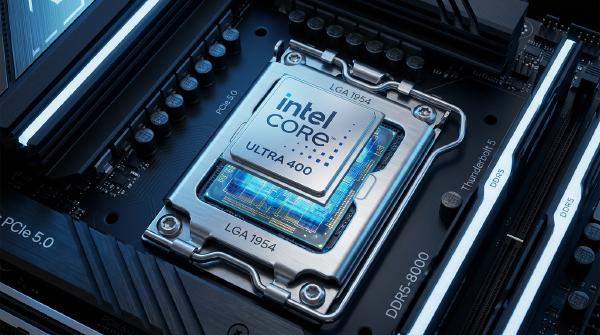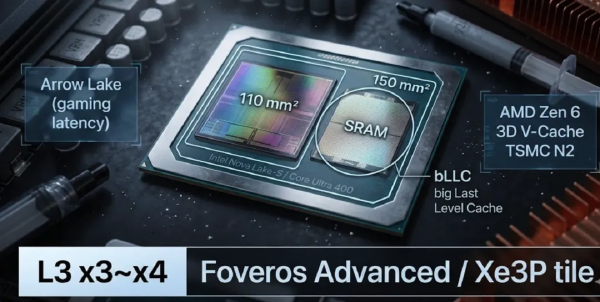
Intel Core Ultra 400 Nova Lake Clears USB and PCIe Validation
Intel’s next-generation Core Ultra 400 series, reportedly codenamed Nova Lake, has reached another important platform-validation milestone.
Recent entries in the USB Implementers Forum (USB-IF) and PCI-SIG Integrators Lists show multiple Intel device IDs that have completed interoperability testing for USB and PCI Express technologies. The listings indicate that Nova Lake platform development has progressed into formal standards validation, although they do not establish an official launch date or confirm every rumored specification.
Reports from Tom’s Hardware identify the newly listed parts as components associated with Intel’s upcoming Nova Lake mobile and desktop platforms.
🔌 USB-IF Certification: USB4 Reaches 80Gbps #
The USB-IF listings provide the clearest evidence of Nova Lake’s connectivity capabilities so far.
Two device IDs associated with the reported Nova Lake-H mobile platform, D331 and D333, have passed certification for USB4 at up to 80Gbps.
A separate desktop-side entry, device ID 6E6E, corresponds to a reported Nova Lake PCH-S chipset and has passed validation for USB 3.2 Gen 2, supporting up to 20Gbps.
| Platform | Device ID | USB standard | Maximum data rate |
|---|---|---|---|
| Nova Lake-H mobile | D331, D333 |
USB4 | 80Gbps |
| Nova Lake PCH-S desktop | 6E6E |
USB 3.2 Gen 2 | 20Gbps |
The difference between the mobile and desktop entries is noteworthy. The certification data confirms the tested interfaces, but it does not necessarily describe every USB implementation that will ship across the entire Nova Lake product family.
Thunderbolt 5 Remains Unconfirmed #
The USB4 80Gbps certification is consistent with previous expectations that some Nova Lake-H systems could support Thunderbolt 5.
However, the USB-IF certification itself does not constitute confirmation of Thunderbolt 5 support. Intel has not publicly confirmed the final Thunderbolt configuration for these specific device IDs, so that capability should remain categorized as an expectation rather than an established specification.
🧩 Qualification by Similarity Explains the Missing CPUs #
One apparent gap in the USB-IF listings is that desktop Nova Lake processors have not yet appeared individually alongside the PCH-S entry.
This does not necessarily indicate a missing feature.
USB-IF provides a Qualification by Similarity (QbS) mechanism that can reduce redundant certification work for closely related products using substantially the same USB implementation. A manufacturer can qualify a representative design and subsequently submit related products under the applicable similarity process.
The resulting certification process can therefore look incomplete when viewed purely as a product-by-product list:
Representative design
        │
        ▼
 USB-IF qualification
        │
        ▼
Qualification by Similarity
        │
   ┌────┴────┐
   ▼         ▼
Related    Related
SKU        SKU
Consequently, the absence of a particular desktop CPU from the current Integrators List should not be interpreted as evidence that the final processor lacks a particular USB capability.
🖥️ PCI-SIG: 900-Series Chipsets Appear #
The PCI-SIG Integrators List provides another piece of the Nova Lake platform puzzle.
Several device-ID ranges associated with Intel’s reported 900-series desktop chipsets have appeared in the list, including:
6E30–6E356E38–6E3F6E40–6E47
According to reporting based on the PCI-SIG listings, these entries have been present since April 2026. (Tom’s Hardware)
These listings are consistent with the expected supporting chipset family for the upcoming Nova Lake-S desktop platform, although the public compliance database itself primarily exposes device identifiers rather than Intel’s final retail product names.
⚙️ PCIe 5.0 x16 Root Complex Validation #
An additional group of Intel processor device IDs appeared in PCI-SIG testing in early August:
D461
D465
D467–D46A
These parts completed interoperability testing involving a PCIe 5.0 x16 root complex.
The device IDs are widely reported as likely belonging to the upcoming desktop Nova Lake platform, but this identification has not been officially confirmed by Intel. Tom’s Hardware likewise describes the association as probable rather than definitive. (Tom’s Hardware)
That distinction matters because PCI-SIG compliance records validate an interface implementation; they do not inherently reveal the commercial CPU name attached to the silicon.
📋 What the Compliance Records Actually Confirm #
The available information can be separated into confirmed certification results and platform identification that remains inferred.
| Device ID | Certification body | Confirmed result | Nova Lake association |
|---|---|---|---|
D331, D333 |
USB-IF | USB4, 80Gbps | Reported Nova Lake-H |
6E6E |
USB-IF | USB 3.2 Gen 2, 20Gbps | Reported Nova Lake PCH-S |
6E30–6E35 |
PCI-SIG | Integrators List entry | Reported 900-series chipset |
6E38–6E3F |
PCI-SIG | Integrators List entry | Reported 900-series chipset |
6E40–6E47 |
PCI-SIG | Integrators List entry | Reported 900-series chipset |
D461, D465, D467–D46A |
PCI-SIG | PCIe 5.0 x16 root complex | Likely Nova Lake desktop CPU |
The first two rows have relatively clear platform associations in current reporting. The last group should be treated more cautiously because the commercial identities behind those PCI-SIG device IDs have not been publicly confirmed by Intel. (Tom’s Hardware)
🚀 What This Means for the Nova Lake Launch #
Compliance testing is an important part of bringing a new platform to market.
For interfaces such as USB and PCI Express, interoperability validation helps ensure that the silicon behaves according to the relevant specifications and can participate in the corresponding certification ecosystem.
The current sequence therefore looks roughly like this:
Nova Lake silicon
       │
       ▼
Platform integration
       │
       ▼
USB-IF / PCI-SIG validation
       │
       ▼
Motherboard and system qualification
       │
       ▼
Official product launch
The newly surfaced entries show that multiple pieces of the platform have progressed through the standards-validation stage.
They do not, however, prove that retail products are immediately shipping.
📅 Is Nova Lake Launching in Q1 2027? #
Current industry reporting points to Q1 2027 as the expected launch window for Core Ultra 400-series Nova Lake products.
That timeline remains unconfirmed by Intel. The compliance listings provide evidence of ongoing platform preparation, but neither USB-IF nor PCI-SIG certification establishes a commercial release date.
In other words:
USB / PCIe compliance
        ≠
Official launch date
The certifications are better interpreted as evidence that Intel is advancing the platform through late-stage interoperability and qualification work.
🔍 What Remains Unknown #
Several important Nova Lake details are still not established by these compliance records:
- Final CPU model names
- Core configurations
- Final clock speeds
- Processor power limits
- Performance characteristics
- Pricing
- Retail availability
- Exact desktop and mobile SKU segmentation
- Thunderbolt 5 support on specific models
- Official launch date
The certification databases are therefore useful because they reveal platform engineering progress, not because they provide a complete Nova Lake specification sheet.
🧠 Conclusion #
The appearance of Intel’s next-generation platform in USB-IF and PCI-SIG compliance databases is a meaningful pre-launch milestone.
The reported Nova Lake-H device IDs D331 and D333 have passed USB4 80Gbps validation, while the reported desktop PCH-S device 6E6E has passed USB 3.2 Gen 2 validation. Meanwhile, Intel’s 900-series chipset IDs are present in PCI-SIG listings, and an unidentified group of Intel processors has passed PCIe 5.0 x16 root-complex testing. (Tom’s Hardware)
Taken together, the records indicate that Intel is actively progressing Nova Lake through formal platform validation.
They do not yet turn the remaining leaks into confirmed specifications, nor do they establish an exact launch date. For now, the most defensible conclusion is that Core Ultra 400 / Nova Lake is moving through the certification stages expected before a future commercial launch, with current reporting pointing toward early 2027.