Who Is Harvey Jones? The NVIDIA Chairman Rejecting Jensen Huang’s Return
When a founder leaves a company as influential as NVIDIA, the immediate question is usually who will replace them. But the more revealing question is who gets to decide whether they can come back.
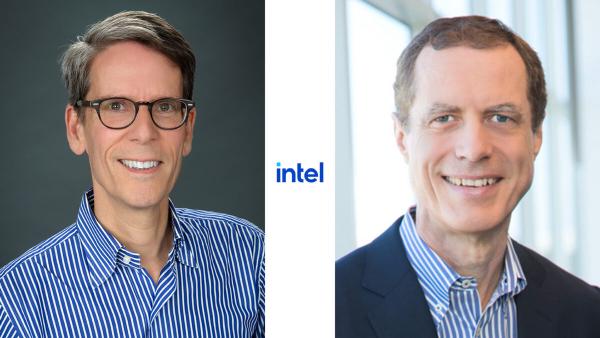
That question has put Harvey C. Jones in the spotlight. NVIDIA’s longtime independent director and newly appointed chairman has become the board’s public voice in rejecting calls for Jensen Huang’s reinstatement.
The response has attracted considerable attention across Silicon Valley. Elon Musk has publicly defended Huang, comparing his departure to removing Michael Jordan from a championship basketball team. Musk has also said he would welcome Huang at one of his own companies if NVIDIA no longer wanted him. Alongside Epic Games CEO Tim Sweeney, Musk supported an open petition calling for Huang’s return, which has reportedly attracted more than 190,000 signatures.
The intervention did not stop there.
Amazon founder Jeff Bezos also addressed the situation at the “Silicon Valley and the World” summit in Menlo Park. He acknowledged that he did not know the details of the investigation and avoided taking a direct position on its findings. Nevertheless, he praised Huang’s achievements as a founder and warned NVIDIA’s board against parachuting in an external CEO without understanding the company’s technical complexity.
His message was straightforward: NVIDIA should think carefully before replacing its existing leadership structure with an outsider.
The board’s response, however, has been equally direct. It has no intention of bringing Huang back.
The person delivering that message is not a conventional corporate spokesperson. Harvey C. Jones, now 73, has been associated with NVIDIA since its founding in 1993. He has witnessed the company’s transformation from a small graphics-chip startup into one of the world’s most influential semiconductor businesses.
His background also makes him an unusual choice for this moment. Jones has founded and led technology companies, managed a major EDA business, and personally overseen a CEO succession at Synopsys.
Understanding why he is speaking for NVIDIA’s board requires looking at the four decades of semiconductor and corporate experience behind him.
🧠 A Semiconductor Veteran Built for Leadership Transitions #
Before this leadership dispute, Harvey Jones was largely unknown to retail investors who associated NVIDIA primarily with Jensen Huang and his trademark leather jacket.
His connection to the company goes back to 1993. When Huang and co-founders Chris Malachowsky and Curtis Priem were developing NVIDIA’s original business plan at a Denny’s restaurant in California, early investors from Sequoia Capital and Sutter Hill Ventures recognized a gap in the founding team’s experience.
The founders were engineers. The company also needed someone who understood how to build and operate a technology business.
Jones was invited to join the board to fill that role.
From Mathematics and Computer Science to Technology Management #
Jones graduated from Georgetown University with degrees in mathematics and computer science before earning a Master of Science in Management from MIT.
That combination of technical and business training shaped his subsequent career in the semiconductor industry.
In 1981, before turning 30, Jones co-founded Daisy Systems, an early pioneer in Computer-Aided Engineering (CAE).
He initially handled sales and marketing before becoming President and CEO. Under his leadership, Daisy Systems grew from virtually no revenue to approximately $122.5 million by fiscal 1985. The company also completed its public listing in 1983.
Daisy’s eventual difficulties also provided Jones with an early lesson in technology strategy.
The company pursued a vertically integrated business model built around proprietary workstations, operating systems, and engineering software. This approach gave Daisy control over its complete product stack, but it also created a dependency on its own hardware platform.
As general-purpose workstations became more capable and competitors began offering software that ran on standardized hardware, Daisy struggled to adapt.
Its existing hardware business and installed customer base made a strategic transition difficult. Jones left the company in 1987.
The experience illustrated a problem that continues to affect technology companies: an installed base can become a competitive advantage, but it can also restrict the willingness to replace an aging architecture.
Building Synopsys into an EDA Industry Leader #
After leaving Daisy Systems, Jones moved into another major semiconductor technology business.
From 1987 to 1998, he played a central leadership role at Synopsys, one of the world’s leading Electronic Design Automation (EDA) companies.
EDA software is fundamental to modern semiconductor development. Companies use these tools to describe digital circuits, synthesize logic, verify functionality, analyze timing, and prepare designs for physical implementation.
When Jones joined Synopsys, he concentrated on building the commercial organization, including sales, marketing, operations, and international distribution.
He also personally helped recruit the company’s early sales personnel.
The growth was substantial. Synopsys revenue increased from approximately $130,000 in 1987 to $148.2 million in fiscal 1993. The company went public in 1992 and eventually controlled roughly 70% of the logic synthesis market.
That experience is particularly relevant to NVIDIA. Jones understands the semiconductor business from both the commercial and operational sides, rather than simply as an investor observing the industry from outside.
His experience also gave him direct exposure to the relationship between chip complexity, engineering software, and long-term technology investment.
A CEO Succession He Had Already Managed #
Perhaps the most relevant part of Jones’s background is his experience managing a leadership transition at Synopsys.
After seven years as CEO, Jones stepped back into the Executive Chairman position in 1994 and handed the CEO role to company co-founder Aart de Geus.
The transition was successful. De Geus subsequently led Synopsys for roughly three decades.
There are obvious differences between that succession and NVIDIA’s current situation. At Synopsys, an established CEO transferred operational authority to a co-founder. NVIDIA, by contrast, is dealing with a founder’s departure and a board-led search for new leadership.
Nevertheless, Jones has already experienced the difficult process of separating a company’s long-term institutional interests from the authority of a single executive.
He knows that a successful transition requires more than announcing a new CEO. It requires preserving technical direction, maintaining employee confidence, and giving the successor enough authority to operate independently.
That experience is valuable when dealing with a company whose identity has been closely associated with its founder for more than three decades.
Three Decades Inside NVIDIA’s Boardroom #
Jones’s relationship with NVIDIA goes back to the company’s founding.
For much of its history, Huang combined the roles of President, CEO, and a central board member. NVIDIA did not previously have a separate independent Chairman of the Board.
Within the board’s committee structure, Jones played an important role in both the Audit Committee and the Nominating and Corporate Governance Committee.
These responsibilities put him close to two areas that matter during an executive crisis:
- Financial oversight, internal controls, and corporate compliance.
- Board composition, director appointments, executive oversight, and CEO succession planning.
He also understands NVIDIA’s technological development from the inside.
Jones has watched the company move through its early graphics-chip business, its IPO, the transition toward programmable GPUs, the CUDA software investment, and the current AI computing boom.
That combination of institutional knowledge and governance experience is difficult to replicate with an external director.
NVIDIA needs someone who understands semiconductor research and development cycles, can communicate with experienced engineers, and can demonstrate to institutional shareholders that the board is capable of independent oversight.
An outsider without semiconductor experience might struggle to command credibility inside the engineering organization. A founder loyalist, meanwhile, could have difficulty convincing regulators and investors that the board is making independent decisions.
Jones occupies an unusual position between those two groups.
Why the New Chairman Role Matters #
One of the clearest structural changes following Huang’s departure was the creation of the Chairman position.
Previously, NVIDIA had no separate Chairman of the Board. The company had largely operated around a founder-led executive structure.
After Huang’s resignation, the board formally established the Chairman role and appointed Jones.
This is more than a change in title.
It signals a move away from a governance structure centered on one founder toward a model in which the board exercises more visible independent oversight while management handles daily operations.
Jones is positioned to represent that change.
His age and financial independence also make him an unusual candidate for a conventional CEO succession battle. At 73, with decades of executive experience and his own family investment firm, he has little apparent incentive to pursue NVIDIA’s top operational position.
That allows him to focus on the board’s responsibilities: overseeing interim management, organizing the CEO search, and ensuring that the eventual successor meets the company’s requirements.
⚖️ NVIDIA’s Leadership Transition and the Founder Paradox #
Following his remarks on the earnings call, Jones joined interim CEO Colette Kress for an all-hands meeting with NVIDIA employees.
The meeting addressed two immediate concerns: compensation and the possibility of Huang returning.
Kress began with the issue employees were most likely to care about in the short term.
She announced that NVIDIA would bring forward the following year’s annual salary increases and additional equity grants to December.
Her message was intended to reassure employees that the leadership change would not leave their compensation or position within the company uncertain.
Jones then addressed the more difficult question.
Why couldn’t NVIDIA simply bring Huang back?
He reiterated that the board’s unanimous decision to accept Huang’s resignation followed an investigation into his personal conduct and what the board described as a lack of candor.
He also made clear that the company would not search for a direct replacement who simply replicated Huang’s personality and management style.
That distinction matters. A company should select its next CEO based on the requirements of the business, not an expectation that the successor must behave like the founder.
NVIDIA Is Not Looking for a Jensen Huang Clone #
According to Jones, NVIDIA has retained executive search firm Heidrick & Struggles to evaluate potential candidates.
The search reportedly includes both internal executives and external candidates.
Potential internal names include Colette Kress and CUDA architect Ian Buck. External possibilities include Arm CEO Rene Haas, who previously spent seven years at NVIDIA.
The board’s stated position is that it will not compromise its selection standards simply to accelerate the process.
This approach reflects the difficulty of replacing a founder at a technically complex company.
NVIDIA’s next CEO needs to understand more than financial management. The role requires familiarity with GPU architecture, software ecosystems, AI infrastructure, manufacturing relationships, hyperscaler customers, and long-term product planning.
The CEO must also be able to maintain the confidence of employees and customers without relying on the founder’s personal reputation.
Musk’s comparison with Michael Jordan makes for a memorable headline, but it does not fully capture NVIDIA’s situation.
A basketball team depends heavily on the performance of individual players. A mature semiconductor company should have institutional processes, technical leadership, and a product roadmap capable of surviving changes at the executive level.
That is precisely what the board now needs to demonstrate.
Why the Steve Jobs Comparison Does Not Quite Fit #
The natural historical comparison is Apple’s decision to remove Steve Jobs from operational leadership in 1985.
The similarities are obvious: both situations involve a highly influential founder leaving a major technology company, followed by public debate about whether the founder should eventually return.
But the underlying circumstances were very different.
Apple’s 1985 conflict was fundamentally a struggle between competing management factions and strategic priorities.
Jobs controlled the Macintosh division and advocated a product strategy centered on his own vision. CEO John Sculley represented a more conventional management approach emphasizing marketing, financial discipline, and organizational control.
The disagreement eventually became irreconcilable. Apple’s board chose Sculley.
Importantly, Apple did not initially intend to remove Jobs from the company entirely. He retained the Chairman title and was expected to work on longer-term products and technologies.
However, Jobs was unwilling to remain in a largely ceremonial position without operational authority. After preparing to establish NeXT with several colleagues, he resigned as Chairman and director.
Apple Continued Growing After Jobs Left #
Another frequently overlooked detail is that Apple did not immediately collapse after Jobs’s departure.
The company continued operating for another eleven years before his return in 1997.
In fact, Apple achieved strong financial results during parts of that period. Net profit reached approximately $474 million in 1990, while the Macintosh, LaserWriter, and desktop publishing ecosystem continued expanding commercially.
Sculley remained in charge for several years, and Apple’s more serious problems emerged later.
The company eventually struggled with operating-system development, an increasingly complicated product lineup, and competition from lower-cost personal computers.
By the mid-1990s, Apple’s strategic direction had deteriorated enough that bringing Jobs back became part of its restructuring effort.
NVIDIA’s current situation is not an equivalent internal power struggle.
There is no publicly described factional conflict over GPU architecture or a competing technology strategy. The leadership change is instead being framed by the board around personal conduct, compliance, and corporate governance.
That difference makes a future return modeled on Jobs’s comeback far from inevitable.
NVIDIA’s Founder Paradox #
The more interesting question is whether NVIDIA has become sufficiently mature to operate without Jensen Huang.
This creates an apparent paradox.
The more successfully a founder builds an organization, the more capable that organization should become of operating independently of the person who created it.
NVIDIA’s development over the past 33 years provides several reasons why the company may be better positioned for this transition than its public image suggests.
First, it has built a substantial software ecosystem around CUDA. Developers, researchers, cloud providers, and enterprise customers have invested heavily in software and infrastructure designed for NVIDIA GPUs.
This ecosystem is not dependent on Huang personally delivering every product decision.
For a closer look at how this software and hardware relationship has evolved, see KAD’s analysis of NVIDIA’s Rubin GPU architecture.
Second, NVIDIA has established long-term commercial relationships with hyperscalers and enterprise customers. Multi-year infrastructure investments, software migration costs, and large-scale procurement commitments create a business ecosystem that extends well beyond the founder’s personal network.
Third, the company has developed a detailed hardware roadmap extending across multiple generations of GPU and AI infrastructure products.
The transition from Blackwell to Vera Rubin and subsequent architectures involves thousands of engineers, manufacturing partners, software developers, and system integrators.
The roadmap cannot be maintained by one executive alone.
NVIDIA also has experienced leaders who have spent years developing expertise in their respective areas. Kress understands the company’s financial operations, Ian Buck has deep CUDA experience, and Debora Shoquist has extensive operational and engineering management experience.
The existence of this management bench does not guarantee a smooth transition. But it does mean the company is not starting from zero when searching for its next CEO.
For additional context on the hardware side, KAD’s coverage of NVIDIA’s Blackwell Ultra architecture examines how the company continues evolving its accelerator platforms beyond any single product generation.
A $4 Trillion Company Cannot Depend on One Person #
Musk’s Michael Jordan analogy captures the emotional attachment that investors, employees, and technology leaders can develop toward a successful founder.
But there is a fundamental difference between a sports team and a global semiconductor company.
NVIDIA operates across GPU design, software development, networking, data-center infrastructure, advanced packaging, and long-term relationships with some of the world’s largest technology companies.
Its business depends on thousands of specialized engineering decisions and an extensive network of external partners.
Wall Street, institutional shareholders, and regulators also expect a company of this scale to maintain effective governance and executive succession planning.
That expectation becomes particularly important when the departing executive is also the company’s most recognizable public figure.
Jones’s responsibility is therefore not simply to defend the board’s decision against public criticism. He must demonstrate that NVIDIA can preserve its technical direction, maintain employee confidence, and select a CEO capable of managing the company without recreating its founder-centered structure.
The real test of NVIDIA’s post-Jensen era will be whether its engineering organization, CUDA ecosystem, customer relationships, and product roadmap continue operating effectively under independent management.