Wind River Private Cloud Suite 26.03 Enhances Edge-to-Core Operations
Wind River has released Private Cloud Suite 26.03, delivering major upgrades focused on:
- Distributed cloud flexibility
- Operational resilience
- Infrastructure automation
- Security modernization
- Compute and storage scalability
The release combines improvements across:
- Wind River Cloud Platform
- OpenStack
- Conductor
- Analytics
to provide a more efficient and secure private cloud foundation for edge, telecom, enterprise, and AI-driven workloads.
As organizations increasingly deploy cloud-native infrastructure across geographically distributed environments, Private Cloud Suite 26.03 aims to simplify lifecycle management while improving performance, governance, and operational continuity.
☁️ Architectural Flexibility for Distributed Deployments #
One of the primary goals of Private Cloud Suite 26.03 is improving deployment flexibility across distributed and edge environments.
The platform adopts a:
Hardware-agnostic infrastructure modelallowing organizations to optimize deployments according to:
- Performance requirements
- Cost targets
- Scalability goals
- Long-term modernization strategies
This approach enables broader compatibility across modern compute ecosystems.
⚡ Expanded Processor Platform Support #
Private Cloud Suite 26.03 extends hardware support across both Intel and AMD enterprise platforms.
Intel Xeon 6 Integration #
The release introduces support for:
Intel Xeon 6 processorstargeting:
- AI inference workloads
- Telco edge infrastructure
- Enterprise real-time applications
Intel Xeon 6 provides improved edge compute performance while maintaining deterministic operational behavior required by distributed environments.
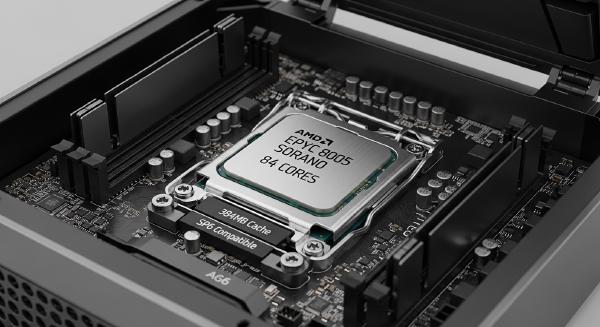
AMD EPYC Platform Expansion #
Wind River also expanded support for:
AMD EPYC–based server platformsThis allows organizations to deploy:
- Real-time RAN workloads
- AI-driven applications
- Mission-critical private cloud services
on shared infrastructure environments.
The expanded hardware ecosystem gives operators more flexibility when balancing:
- Power efficiency
- Performance density
- Cost optimization
- Workload specialization
🚀 Faster Lifecycle Operations and Reduced Downtime #
Distributed cloud environments place significant operational pressure on maintenance workflows.
To address this, Private Cloud Suite 26.03 introduces multiple optimizations aimed at reducing lifecycle overhead.
Boot and Reboot Optimization #
Wind River refined:
- Startup sequences
- Shutdown behavior
- Service initialization logic
to eliminate unnecessary configuration checks and disable services not required for specific deployments.
The result is:
Approximately 20% reduction
in reboot time for single-node clusters
(all-in-one simplex deployments)
depending on hardware configuration and workload dependencies.
Operational Benefits #
These optimizations improve:
- Maintenance efficiency
- Patch deployment speed
- Update responsiveness
- Operational continuity
For edge and distributed deployments, minimizing reboot duration directly reduces:
- Downtime exposure
- Service disruption risk
- Recovery latency
🔐 Security Enhancements and Zero-Trust Integration #
Security modernization is another major focus of the 26.03 release.
Wind River expanded enterprise identity integration and access governance to align more closely with modern zero-trust security architectures.
🧩 OpenID Connect and MFA Integration #
Private Cloud Suite 26.03 now supports:
- OpenID Connect (OIDC)
- Multi-factor authentication (MFA)
through integration with enterprise identity providers (IdPs).
Supported Authentication Scope #
The integration extends centralized authentication across:
- StarlingX APIs
- Kubernetes services
- Management interfaces
- OpenStack environments
This allows organizations to federate authentication through existing enterprise identity systems rather than creating isolated authentication silos.
Key Benefits #
| Feature | Benefit |
|---|---|
| OIDC federation | Centralized identity management |
| MFA support | Stronger access protection |
| Shared credential governance | Reduced operational complexity |
| Unified authentication | Consistent security policy enforcement |
🏢 LDAP and Active Directory Improvements #
The release also expands integration with enterprise directory services.
Supported backends include:
- Local LDAP
- Remote LDAP
- Microsoft Active Directory
Expanded Authentication Coverage #
Private Cloud Suite 26.03 extends directory integration into:
- Additional platform interfaces
- OpenStack authentication workflows
- Centralized remote authentication systems
This enables organizations to consolidate identity management across both:
- Infrastructure layers
- Virtualization layers
Security Advantages #
Centralized directory integration helps reduce:
- Fragmented identity stores
- Credential duplication
- Manual user lifecycle management
while improving:
- Auditability
- Compliance alignment
- Policy consistency
across distributed deployments.
🛡️ Granular Role-Based Access Control #
Wind River also strengthened:
Role-Based Access Control (RBAC)through more flexible policy-driven governance.
Organizations can now define:
- Custom operational roles
- Site-specific access policies
- Scalable privilege boundaries
This ensures that least-privilege access models remain manageable even as deployments expand across multiple regions and edge locations.
🤖 Conductor Automation and Operational Continuity #
A major theme in Private Cloud Suite 26.03 is shifting cloud operations from reactive management toward automated continuity.
Much of this functionality is delivered through:
Wind River Conductorwhich serves as the suite’s orchestration and lifecycle governance engine.
🌍 Subcloud Rehoming #
One of the most significant new Conductor capabilities is:
Subcloud rehomingThis allows operators to:
- Reorganize infrastructure
- Migrate edge sites
- Move workloads between system controllers
- Prepare disaster recovery environments
without interrupting active services.
Batch and Individual Operations #
The feature supports:
- Individual site migration
- Batch processing across multiple deployments
ensuring operational consistency across distributed infrastructures.
🔄 Autonomous Lifecycle Governance #
Private Cloud Suite 26.03 also expands closed-loop automation capabilities.
Policy-Based Automation #
Conductor continuously monitors infrastructure state and automatically performs lifecycle actions based on predefined policies.
This includes:
- Provisioning
- Scaling
- Deprovisioning
- Configuration enforcement
Operational Advantages #
Automated governance helps organizations:
- Reduce manual intervention
- Prevent configuration drift
- Improve SLA compliance
- Standardize deployment behavior
across large-scale distributed environments.
💾 Built-In Workload Protection and Recovery #
The release also introduces stronger workload protection capabilities.
Centralized Backup Scheduling #
Conductor now supports centralized scheduling for:
- OpenStack VM backups
- Volume backups
- Image backups
across both:
- Subcloud deployments
- Standalone environments
Flexible Storage Targets #
Administrators can configure:
- Multiple backup destinations
- Batch execution workflows
- Distributed recovery policies
This improves resilience for mission-critical cloud services.
🗄️ Compute and Storage Modernization #
Private Cloud Suite 26.03 significantly expands storage integration capabilities for both containerized and virtualized workloads.
🔌 Expanded SAN and External Storage Support #
The release adds broader support for enterprise storage protocols, including:
- Fibre Channel (FC)
- iSCSI
- Network File System (NFS)
These integrations allow organizations to deploy flexible storage architectures across cloud-native environments.
⚙️ OpenStack Storage Backend Integration #
Wind River OpenStack now supports external storage backends for:
- Cinder
- Glance
- Nova
Combined with CSI-based integrations, organizations can deploy:
- Internal Ceph storage
- External SAN infrastructure
- Hybrid storage environments
Multipath and Redundancy Features #
The platform also supports:
- Storage path redundancy
- Multipath failover protection
- Flexible storage routing
to improve resiliency for critical workloads.
📈 Enterprise Storage Modernization Benefits #
The expanded storage ecosystem enables several important enterprise capabilities.
Independent Scaling #
Organizations can independently scale:
- Compute resources
- Storage capacity
without tightly coupling infrastructure growth.
Boot-from-SAN and Stateless Compute #
Support for:
Boot-from-SAN architecturesallows stateless compute models that simplify node replacement and disaster recovery.
QoS and Disaster Recovery #
Additional capabilities include:
- Quality-of-service (QoS) isolation
- Synchronous replication
- Zero-RPO disaster recovery
These features are especially important for:
- Telecom infrastructure
- Financial services
- AI platforms
- Mission-critical enterprise workloads
🔍 Final Thoughts #
Wind River Private Cloud Suite 26.03 represents a significant step forward for organizations operating distributed private cloud infrastructure across edge and core environments.
The release focuses heavily on:
- Operational automation
- Security modernization
- Hardware flexibility
- Lifecycle efficiency
- Enterprise storage integration
By combining:
- OpenStack
- Kubernetes
- StarlingX
- Conductor automation
within a unified operational framework, Wind River continues positioning the platform as a resilient foundation for modern cloud-native infrastructure.
For enterprises, telecom providers, and edge operators managing increasingly complex distributed systems, the 26.03 release delivers meaningful improvements in:
- Infrastructure scalability
- Operational continuity
- Security governance
- Performance optimization
- Disaster recovery readiness
As edge computing, AI workloads, and cloud-native telecom infrastructure continue to expand, platforms capable of delivering deterministic operations with centralized governance will become increasingly critical — and Wind River is clearly evolving Private Cloud Suite to meet those demands.