Intel 18A Xeon 6+ Redefines Edge AI Server Efficiency
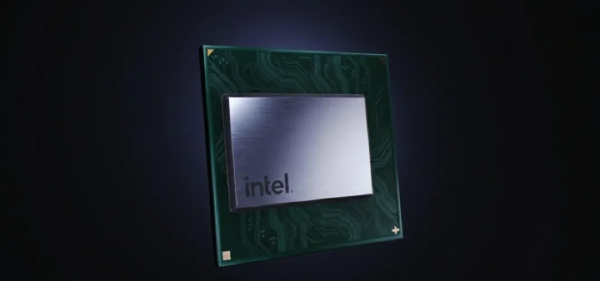
Intel’s confirmation that its first 18A-based server processor has entered mass production marks one of the most significant milestones in the company’s recent manufacturing and data center roadmap.
The new:
Xeon 6+ "Clearwater Forest"platform is more than just another server CPU release.
It represents:
- The first commercial server deployment of Intel’s 18A process
- A major architectural push toward edge AI infrastructure
- A validation of Intel’s advanced packaging strategy
- A renewed competitive challenge against TSMC-powered rivals
Most importantly, Clearwater Forest highlights how the server industry is increasingly optimizing for:
- Performance-per-watt
- Density
- Edge deployment scalability
- AI inference efficiency
rather than raw clock frequency alone.
🚀 Intel’s 18A Process Reaches Commercial Maturity #
For several years, Intel’s advanced process roadmap has been under intense industry scrutiny.
The:
18A nodehas been viewed as Intel’s primary response to TSMC’s advanced 3nm-class manufacturing leadership.
Industry skepticism centered around:
- Yield maturity
- Manufacturing scalability
- Schedule risk
- Packaging integration complexity
Multiple analysts previously predicted:
- 18A server products would slip into late 2026
- Consumer products might not arrive until 2027
Intel’s announcement that Clearwater Forest has already entered volume production significantly alters that narrative.
By launching 18A first in the server market, Intel is effectively demonstrating that:
- The process is commercially viable
- Yields are production-ready
- Advanced packaging integration is operational at scale
This is a major strategic validation for Intel Foundry and Intel’s broader manufacturing recovery effort.
⚙️ Why Intel Targeted Edge AI First #
Interestingly, Clearwater Forest is not positioned primarily as a traditional hyperscale compute processor.
Instead, Intel is targeting:
- 6G infrastructure
- Distributed edge computing
- AI inference workloads
- Telecom edge deployments
This is strategically important because edge infrastructure has very different constraints from centralized cloud data centers.
Edge deployments are typically limited by:
- Physical space
- Cooling capacity
- Power delivery
- Remote operational costs
Unlike hyperscale facilities, edge nodes cannot simply scale by adding more racks and power infrastructure.
This makes efficiency and density critically important.
🧠 E-Core Architecture Becomes the Centerpiece #
Unlike Intel’s traditional Xeon platforms that emphasize large Performance-cores (P-cores), Clearwater Forest exclusively uses:
Darkmont Efficiency-cores (E-cores)This design philosophy prioritizes:
- Throughput density
- Power efficiency
- Thermal scalability
- Massive parallelism
over peak single-thread performance.
The result is a processor optimized specifically for workloads such as:
- AI inference
- Telecom packet processing
- Distributed networking
- Edge analytics
- Virtualized radio access networks (vRAN)
These workloads benefit more from:
- Core count
- Energy efficiency
- Memory bandwidth
- Parallel execution
than from ultra-high clock speeds.
🔬 Four Major Intel Technologies Combined #
Clearwater Forest integrates several of Intel’s most ambitious silicon technologies into a single package.
RibbonFET Transistors #
Intel’s RibbonFET architecture is its implementation of:
Gate-All-Around (GAA) transistor technologydesigned to improve:
- Power efficiency
- Switching behavior
- Leakage control
as traditional FinFET scaling becomes increasingly difficult.
PowerVia Backside Power Delivery #
PowerVia moves power routing to the backside of the wafer.
Advantages include:
- Reduced signal congestion
- Improved power integrity
- Better transistor utilization
- Enhanced efficiency
This is one of Intel’s most important long-term scaling technologies.
Foveros Direct 3D Packaging #
Foveros Direct enables high-density die stacking using direct copper-to-copper bonding.
This improves:
- Interconnect density
- Latency
- Bandwidth
- Package integration efficiency
EMIB 2.5D Interconnects #
Intel’s EMIB technology provides high-speed die-to-die communication without requiring a full silicon interposer.
Together, these technologies demonstrate how advanced packaging is becoming as important as transistor scaling itself.
📦 Massive Core Density #
Clearwater Forest combines:
12 compute chipletsto deliver up to:
288 cores per socketAdditional specifications include:
- 576MB L3 cache
- 288MB L2 cache
- Maximum 450W TDP
- LGA7529 socket support
- Single- and dual-socket configurations
This level of density is designed specifically for:
- High-throughput edge compute
- Telecom infrastructure
- AI inference acceleration
- Distributed cloud platforms
⚡ Memory and I/O Designed for AI Infrastructure #
Modern AI and edge workloads require enormous memory and I/O bandwidth.
Clearwater Forest supports:
- 12-channel DDR5
- Memory speeds up to 8000 MT/s
- 96 PCIe 5.0 lanes
- 64 CXL 2.0 lanes
This allows the platform to support:
- High-speed networking
- Accelerators
- NVMe storage
- Memory pooling
- Multi-sensor edge systems
without requiring excessive external expansion hardware.
For edge deployments, reducing add-in card complexity is especially valuable because it improves:
- Power efficiency
- Thermal behavior
- Reliability
- Physical density
📊 Real-World Efficiency Gains Are Significant #
Perhaps the most impressive aspect of Clearwater Forest is its reported real-world efficiency improvements.
Benchmark data from Ericsson showed:
- 30% higher performance
- 38% lower power consumption
compared to a previous-generation dual-socket:
Sierra Forest Xeon 6780Eplatform with the same total core count.
This translates into approximately:
60% better performance-per-wattwhich is a massive improvement for large-scale infrastructure operators.
🏗️ Why Performance-Per-Watt Matters More Than Ever #
Historically, server marketing focused heavily on:
- Raw performance
- Clock frequency
- Single-thread benchmarks
AI infrastructure changes that equation.
Today, operators increasingly optimize for:
- Rack density
- Energy consumption
- Cooling costs
- TCO (Total Cost of Ownership)
In many modern data centers:
- Power availability
- Cooling limits
- Facility constraints
have become the primary scaling bottlenecks.
A CPU that delivers equivalent throughput at substantially lower power consumption can dramatically improve deployment economics.
🌐 Edge AI and 6G Are Driving Architectural Change #
The timing of Clearwater Forest is closely aligned with two major industry shifts:
AI Inference Moving Toward the Edge #
Large AI models are increasingly deployed outside centralized cloud environments.
Examples include:
- Autonomous systems
- Industrial AI
- Telecom AI optimization
- Smart cities
- Distributed analytics
6G Infrastructure Development #
As 6G research moves toward commercial deployment, telecom operators require:
- Dense compute platforms
- Ultra-efficient packet processing
- AI-assisted network optimization
- Virtualized RAN infrastructure
These workloads strongly favor high-core-count efficiency architectures.
🔄 Intel’s Broader Server Strategy #
Intel has already outlined its follow-up roadmap.
The company plans to launch:
Diamond Rapidsin 2027 featuring:
- P-core architectures
- Up to 512 cores
- Higher centralized compute performance
This creates a two-tier strategy:
E-Core Xeons #
Optimized for:
- Edge
- AI inference
- Telecom
- Dense infrastructure
P-Core Xeons #
Optimized for:
- HPC
- Centralized cloud
- High-performance enterprise workloads
This segmentation mirrors broader trends across the semiconductor industry.
🖥️ Ecosystem Support Is Critical #
Intel also emphasized readiness of:
oneAPI 2026.0which provides:
- Unified compiler support
- AI framework compatibility
- Optimized libraries
- Cross-platform acceleration
Software readiness is extremely important for advanced server platforms.
Historically, new hardware architectures often struggled because:
- Toolchains lagged behind
- Software optimization was incomplete
- Migration costs were high
Intel appears focused on minimizing that friction.
📈 Competition in the Server CPU Market Intensifies #
The server CPU landscape is becoming increasingly competitive.
Intel now faces pressure from:
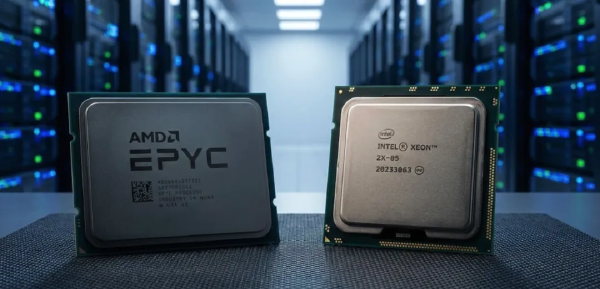
- AMD EPYC
- ARM-based hyperscale processors
- Custom cloud silicon
- AI accelerators
- RISC-V experimentation
At the same time, process technology competition remains fierce.
Clearwater Forest demonstrates that Intel is still capable of pushing aggressive architectural and manufacturing innovation at scale.
🔍 Final Thoughts #
Clearwater Forest is important not simply because it is Intel’s first 18A server CPU.
Its real significance lies in what it represents:
- The growing dominance of efficiency-centric compute
- The rise of edge AI infrastructure
- The importance of advanced packaging
- The increasing role of high-density parallelism
- The shift toward distributed computing architectures
Modern server design is no longer just about maximizing performance.
It is increasingly about delivering the highest possible compute density within strict power, thermal, and operational constraints.
Intel’s 18A Xeon 6+ platform appears designed precisely for that future.
📚 References #
- Intel Xeon 6+ Clearwater Forest Announcements
- Intel oneAPI 2026 Documentation
- Intel 18A Process Technology Briefings
- Ericsson Infrastructure Benchmark Data
- PCIe 5.0 and CXL 2.0 Specifications
- Intel Foveros and EMIB Technical Documentation
- Telecom Edge Computing Industry Reports