AMD Ryzen 7 7700X3D Appears in CPU-Z Ahead of Launch
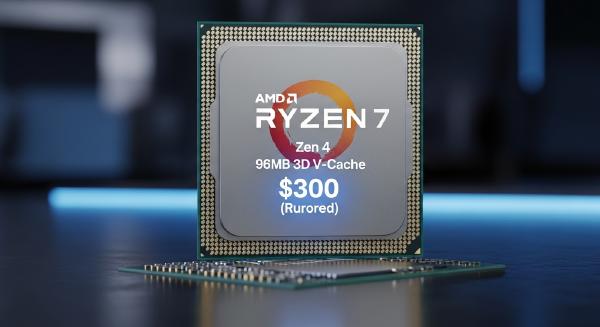
AMD’s previously unannounced Ryzen 7 7700X3D has now been effectively confirmed following the release of CPU-Z v2.20.1, which added official support for the processor. The chip joins AMD’s Zen 4 X3D lineup with an 8-core, 16-thread configuration and the same 96MB of L3 cache found in the Ryzen 7 7800X3D, but with noticeably lower clock speeds.
The processor appears strategically positioned for gamers seeking X3D gaming performance at a lower price point, potentially filling the gap between AMD’s entry-level and premium Zen 4 gaming CPUs.
🧩 CPU-Z Update Confirms the Processor’s Existence #
At the end of May 2026, CPUID updated CPU-Z to version 2.20.1, with the release notes explicitly mentioning support for the AMD Ryzen 7 7700X3D.
For PC hardware enthusiasts, support additions in widely used utilities such as CPU-Z typically indicate that a processor is nearing launch readiness. These updates are generally introduced only after CPU microcode, hardware identifiers, and platform validation have reached mature stages.
Prior to this discovery, the Ryzen 7 7700X3D had only existed through rumors and speculation.
The confirmation is particularly surprising because AMD’s Zen 4 X3D product stack already appeared relatively complete, including:
- Ryzen 7 7800X3D
- Ryzen 9 7900X3D
- Ryzen 9 7950X3D
- Ryzen 5 7600X3D
- Ryzen 5 7500X3D
Given AMD’s historical release cadence, much of the industry expected the company to focus primarily on next-generation Zen 6 products moving forward. The sudden appearance of another Zen 4 X3D SKU therefore caught many observers off guard.
⚙️ Ryzen 7 7700X3D Specifications #
According to currently leaked specifications, the Ryzen 7 7700X3D includes:
- 8 Zen 4 CPU cores
- 16 threads
- 96MB L3 cache
- 120W TDP
- Integrated graphics support
- AM5 platform compatibility
These specifications closely mirror the existing Ryzen 7 7800X3D, suggesting AMD is using essentially the same underlying silicon configuration.
The defining feature remains the large 96MB 3D V-Cache implementation, which continues to be the key reason X3D processors dominate gaming benchmarks across many titles.
For gaming workloads, large L3 cache capacity often reduces memory latency bottlenecks and improves asset streaming efficiency, particularly in:
- Open-world games
- Simulation titles
- Strategy games
- Competitive esports workloads
- CPU-limited scenarios at lower resolutions
As long as AMD preserves the full cache configuration, the processor is expected to retain much of the X3D lineup’s gaming advantage.
📉 Lower Clock Speeds Differentiate It from the 7800X3D #
The primary difference between the Ryzen 7 7700X3D and the Ryzen 7 7800X3D lies in clock frequency.
Current reports suggest the 7700X3D operates at:
- 4.0 GHz base clock
- 4.5 GHz boost clock
This represents a 700 MHz reduction in boost frequency compared to the 7800X3D.
In heavily frequency-sensitive workloads, the lower clocks are expected to create a measurable performance gap. Applications likely to be affected include:
- Video rendering
- Software compilation
- 3D content creation
- Scientific simulation
- Multi-threaded productivity workloads
However, gaming workloads behave differently from traditional productivity applications.
Modern games running on X3D processors often benefit more from cache capacity and memory latency optimization than from raw clock speed alone. As a result, the frame rate reduction in most real-world gaming scenarios may remain relatively small despite the lower frequencies.
This is especially true for GPU-bound gaming resolutions such as:
- 1440p
- Ultrawide 1440p
- 4K gaming
In these environments, GPU limitations frequently overshadow moderate CPU frequency differences.
🎮 AMD Appears to Be Targeting Pure Gamers #
The Ryzen 7 7700X3D appears carefully designed for a very specific audience: users who prioritize gaming above all else and have limited interest in workstation-class productivity performance.
This positioning could allow AMD to address a pricing gap currently sitting between:
- Ryzen 5 7600X3D
- Ryzen 7 7800X3D
If AMD launches the processor at a price roughly 20% to 30% lower than the 7800X3D, the chip could become highly attractive for builders focused on maximizing gaming value-per-dollar.
Such a strategy would give users access to:
- Full 96MB 3D V-Cache
- 8-core longevity
- Strong gaming efficiency
- AM5 platform support
- Lower platform entry cost
without requiring the premium pricing associated with flagship X3D processors.
This may be especially appealing as gaming PC builders continue balancing rising GPU costs alongside broader system budgets.
🖥️ What This Means for PC Builders #
AMD has not yet officially disclosed launch timing or pricing information for the Ryzen 7 7700X3D.
For users planning immediate PC upgrades, there is currently little reason to delay purchases solely for this unreleased SKU. AMD’s existing Zen 4 X3D lineup already provides strong coverage across nearly every gaming-focused price segment.
However, the appearance of the 7700X3D could influence market pricing across the broader AM5 ecosystem.
Potential impacts include:
- Increased pricing pressure on the 7800X3D
- Better value positioning for mid-range AM5 builds
- Expanded availability of affordable X3D gaming systems
- Longer lifecycle support for Zen 4 platforms
For gamers specifically seeking the benefits of AMD’s 3D V-Cache technology without paying flagship-tier prices, the Ryzen 7 7700X3D may ultimately emerge as one of the most cost-effective gaming processors in the Zen 4 generation.
🔍 A Strategic Addition to AMD’s X3D Portfolio #
The Ryzen 7 7700X3D highlights AMD’s continued confidence in the market appeal of X3D gaming processors.
Rather than relying purely on architectural generation upgrades, AMD appears increasingly willing to refine segmentation within existing product families to target highly specific buyer profiles.
The strategy makes sense in today’s market conditions:
- Gaming remains the largest DIY desktop segment
- X3D branding carries strong enthusiast recognition
- AM5 adoption continues expanding
- GPU pricing pressures encourage balanced CPU spending
If the processor launches with aggressive pricing, it could strengthen AMD’s already dominant position in gaming CPU performance while giving budget-conscious enthusiasts another compelling option within the AM5 ecosystem.