NVIDIA Vera CPU Specifications Revealed: 88 Cores, 176 Threads, and 1.5TB LPDDR5X
NVIDIA has officially disclosed the first hardware specifications for its next-generation Vera CPU, offering an early glimpse into the company’s evolving server processor roadmap. While only a handful of specifications have been confirmed, the disclosed configuration—88 CPU cores, 176 threads, and support for up to 1.5TB of LPDDR5X memory—strongly indicates that Vera is designed for AI infrastructure, high-performance computing (HPC), and other memory-intensive data center workloads.
Although many architectural details remain undisclosed, these initial specifications provide valuable insight into NVIDIA’s long-term strategy as it continues expanding beyond GPUs into complete accelerated computing platforms.
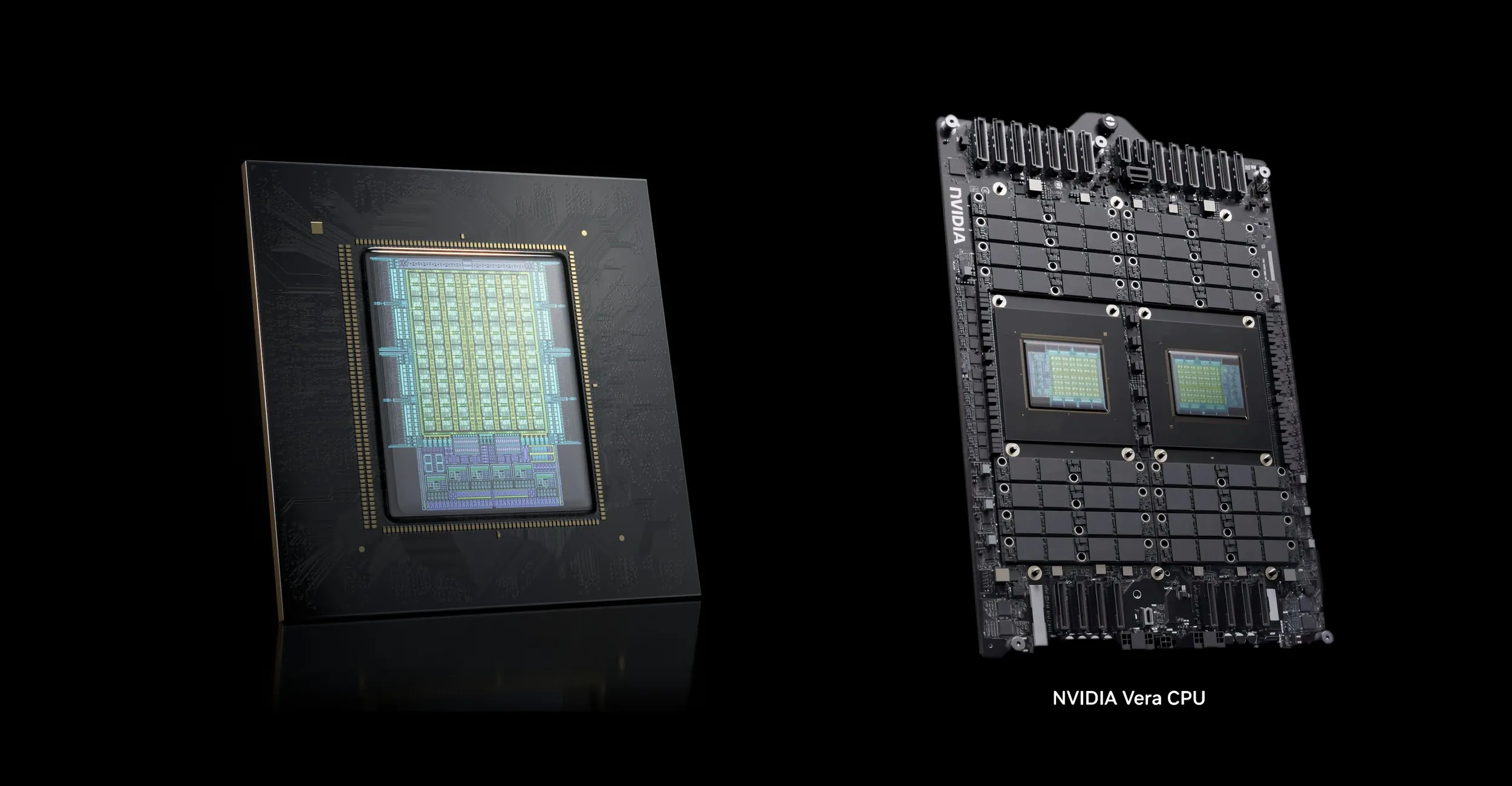
🚀 Officially Confirmed Vera CPU Specifications #
At this stage, NVIDIA has confirmed three primary hardware characteristics for the Vera processor:
| Specification | Confirmed Value |
|---|---|
| CPU Cores | 88 |
| Threads | 176 |
| Maximum Memory | Up to 1.5TB LPDDR5X |
These are currently the only officially published hardware specifications.
High Core Density for Parallel Computing #
With 88 physical cores and 176 simultaneous threads, Vera is clearly engineered for highly parallel workloads rather than traditional desktop applications.
This level of compute density is well suited for scenarios such as:
- Large-scale AI inference
- Distributed computing workloads
- High-performance data analytics
- Scientific simulations
- Virtualized cloud infrastructure
- Enterprise database services
The large thread count enables efficient scheduling of numerous concurrent tasks while maximizing utilization across modern server environments.
Massive LPDDR5X Memory Capacity #
Perhaps the most notable specification is support for up to 1.5TB of LPDDR5X memory.
Such memory capacity targets workloads where large datasets must remain resident in memory, including:
- Large language model (LLM) inference
- AI training preprocessing
- Graph analytics
- In-memory databases
- Scientific computing
- High-performance virtualization
Beyond sheer capacity, LPDDR5X offers advantages in bandwidth and energy efficiency, helping balance performance with power consumption in dense server deployments.
🏗️ What NVIDIA Has Yet to Reveal #
Despite the confirmed core specifications, many critical aspects of the Vera CPU remain unknown.
Information that has not yet been officially disclosed includes:
- CPU microarchitecture
- Manufacturing process node
- Base and boost clock frequencies
- Cache hierarchy and capacity
- Thermal Design Power (TDP)
- Platform I/O capabilities
- PCIe and networking support
- Benchmark performance
- Socket and platform design
Without these details, it remains impossible to accurately compare Vera against competing server processors from AMD or Intel.
Likewise, NVIDIA has not announced:
- Product launch schedule
- Availability timeline
- Pricing
- Target market segments
- System configurations
- Integration with future NVIDIA AI platforms
Any discussion beyond the officially confirmed specifications remains speculative and should be treated accordingly until NVIDIA publishes additional technical information.
📊 What the Current Specifications Suggest #
Even with limited information, Vera’s published specifications reveal several important trends.
Built for Data Center Workloads #
The combination of:
- 88 CPU cores
- 176 hardware threads
- Up to 1.5TB of memory
places Vera firmly within the enterprise and hyperscale computing market rather than the consumer PC segment.
This configuration aligns with workloads requiring both substantial compute density and large memory footprints.
Designed for AI Infrastructure #
Given NVIDIA’s broader strategy around accelerated computing, Vera will likely serve as a companion processor within AI servers rather than functioning as a standalone CPU platform.
Modern AI infrastructure increasingly depends on close coordination between CPUs and GPUs for tasks including:
- Data preprocessing
- Memory management
- Distributed scheduling
- Storage orchestration
- Network communication
High core counts and abundant memory capacity are well suited to supporting these responsibilities while allowing GPUs to remain focused on AI computation.
Preparing for Next-Generation Computing Platforms #
The disclosed specifications also reinforce NVIDIA’s long-term investment in vertically integrated computing platforms.
Rather than supplying only accelerators, the company continues expanding into complete server architectures that combine CPUs, GPUs, networking, and software into unified AI infrastructure solutions.
🔍 What to Watch Going Forward #
Several important questions remain unanswered.
Future announcements will likely clarify:
- Vera’s CPU architecture
- Cache organization
- Performance relative to competing server processors
- Memory bandwidth capabilities
- Power efficiency
- Platform connectivity
- Integration with NVIDIA’s next-generation AI systems
These details will ultimately determine how Vera competes within the rapidly evolving enterprise CPU market.
📝 Conclusion #
Although NVIDIA has revealed only a limited set of specifications, the Vera CPU already demonstrates ambitious hardware capabilities. With 88 cores, 176 threads, and support for up to 1.5TB of LPDDR5X memory, the processor is clearly positioned for AI infrastructure, HPC, and large-scale enterprise computing rather than mainstream desktop applications.
Many key architectural and performance details remain undisclosed, making it too early to assess Vera’s competitive standing. However, the specifications released so far provide a strong indication of NVIDIA’s continued commitment to building comprehensive accelerated computing platforms that extend beyond GPUs into complete data center solutions.
As NVIDIA publishes additional technical information, the Vera CPU will become a product worth closely watching for organizations planning future investments in AI infrastructure and high-performance computing.